# Welcome

Tadaima is here to provide an alternative model to just renting or owning. One where you have the experience of owning and the flexibility of renting. Start your home owning journey today.

At Tadaima, our mission is to bring home ownership to the highly model, and provide the expertise and services to enable homeownership to be a choice instead of a financial decision.

To help understand the ins and outs of real estate, and how Tadaima's model of Sequential Co-ownership fits into it all, we've created this documentation site. We encourage you to find a few spare hours if you can and to read from start to finish if possible. To know how much time is needed, the current

## READ TIME: 1 hour and 23 Minutes

If there's a particular subject that you'd prefer to just read or read first, then below are links to each of the major sections to direct you to them to get started.

<table data-view="cards"><thead><tr><th></th><th data-type="content-ref"></th><th data-hidden data-card-cover data-type="files"></th></tr></thead><tbody><tr><td></td><td><a href="/pages/p2ANuDIUojeHML7sCQS1">/pages/p2ANuDIUojeHML7sCQS1</a></td><td><a href="/files/PPl7rzaLT8IMn2516sDM">/files/PPl7rzaLT8IMn2516sDM</a></td></tr><tr><td></td><td><a href="/pages/jSyISQY0bHuQH2qJTbWP">/pages/jSyISQY0bHuQH2qJTbWP</a></td><td><a href="/files/tEWGXbvetIxzJHhY3LLl">/files/tEWGXbvetIxzJHhY3LLl</a></td></tr><tr><td></td><td><a href="/pages/MxEKZa0mRgaoKaCFNUCD">/pages/MxEKZa0mRgaoKaCFNUCD</a></td><td><a href="/files/TCiFcoCQhKmlCCObindN">/files/TCiFcoCQhKmlCCObindN</a></td></tr><tr><td></td><td><a href="/pages/FdfI4HWNggbVp9DAj2QO">/pages/FdfI4HWNggbVp9DAj2QO</a></td><td><a href="/files/7ftS9jtzEMZuZWoB18k7">/files/7ftS9jtzEMZuZWoB18k7</a></td></tr><tr><td></td><td><a href="/pages/e05KHCpyvRTG0ubMVgj5">/pages/e05KHCpyvRTG0ubMVgj5</a></td><td><a href="/files/0xuvSOBOIoZbUegmClus">/files/0xuvSOBOIoZbUegmClus</a></td></tr><tr><td></td><td><a href="/pages/l0k8e1R9011bOvDbcRft">/pages/l0k8e1R9011bOvDbcRft</a></td><td><a href="/files/PPl7rzaLT8IMn2516sDM">/files/PPl7rzaLT8IMn2516sDM</a></td></tr></tbody></table>


# Myths of Homebuying

Why what most we know is wrong about home buying, and what we can do about it

If you don’t own a home today, there’s a good chance it’s because of a common myth you’ve heard—and believed. But what if I told you that you could qualify to buy a home right now, and you just didn’t know it?

As a society, we pass around what author Todd Rose calls “Collective Illusions”—ideas that seem true simply because they’ve been repeated so often. These myths exist in all aspects of life, including real estate. They shape our decisions, sometimes keeping us from opportunities we didn’t even realize were within reach.

So, before diving into what you *should* know about homeownership, let’s first bust some of the biggest myths that might be holding you back.

#### 5 Common Homebuying Myths—Debunked

1. **You Need at Least a 20% Down Payment** – False. Some loan programs allow you to buy with as little as 0% down.
2. **You Should Wait Until You Have a Stable Job** – Not necessarily. Mortgage qualification is based on more than just job stability.
3. **You Should Wait Until Marriage** – Outdated thinking. People are getting married later, staying single longer, and still buying homes.
4. **You Need to Time the Market Perfectly** – Unrealistic. Even experts struggle to do this, and waiting too long can mean missing out.
5. **Renting Is Always Cheaper Than Buying** – Short-sighted. Renting for 50 years versus owning for 30? Which sounds like the better financial move?

These myths might sound familiar—maybe they’ve even influenced your decisions. But just because something is commonly believed doesn’t mean it’s true. The real question is: Are you willing to reconsider what you thought you knew?

#### What’s Next?

It’s natural to feel some hesitation when hearing an idea that challenges what you’ve always believed. But if some of your assumptions about homeownership are wrong, wouldn’t you want to know?

In the next section, we’ll not only address what’s incorrect, but we’ll also explore what’s *actually* important when deciding to buy a home. Because once we clear away these misconceptions, we can focus on what truly matters—and help you take a more informed and intentional approach to homeownership.

If you’re curious to dive deeper into these myths (and others that didn’t make this list), check out the appendix for additional insights. You might be surprised at just how much misinformation is out there—and how much closer you are to owning a home than you ever thought possible.

{% content-ref url="/pages/VjY6oiL2iFhqac2h057V" %}
[Example 1: 20% Down Payment](/tadaima-co-ownership/myths-of-homebuying/example-1-20-down-payment)
{% endcontent-ref %}

{% content-ref url="/pages/0cf0dwbiSZRGCvN7xuDO" %}
[Example 3: Timing the Market](/tadaima-co-ownership/myths-of-homebuying/example-3-timing-the-market)
{% endcontent-ref %}

{% content-ref url="/pages/luL9WqSnHwYHaokshTK8" %}
[Example 2: Waiting for a Job](/tadaima-co-ownership/myths-of-homebuying/example-2-waiting-for-a-job)
{% endcontent-ref %}

And if you’re OK with reading the documentation one page at a time in the order we have curated the information to be in, then feel free to just click the “Next Page” button below to read up on the first myth and to follow through to each subsequent one too.


# Example 1: 20% Down Payment

Is just Folklore. There’s many different options when it comes to down payments. Both below and above the 20% mark.

The idea that you *need* a 20% down payment to buy a home is one of the biggest misconceptions in real estate. While putting 20% down has its advantages, it's not a strict requirement. Let’s break this down:

### Where Did the 20% Myth Come From?

1. **Avoiding Private Mortgage Insurance (PMI)** – Lenders typically require PMI if you put down less than 20% to protect themselves in case of default. This added cost made people believe 20% was the *required* minimum.
2. **Traditional Lending Standards** – Decades ago, before government-backed loans became more common, lenders preferred 20% down to reduce risk.
3. **Financial Advice for Stability** – Many financial experts push 20% because it leads to smaller monthly payments, lower interest costs, and no PMI.

### The Reality: Lower Down Payment Options

There are several loan programs available that require much less than 20%:

* **FHA Loans** – As low as **3.5% down** for credit scores 580+ (or 10% for scores 500-579).
* **Conventional Loans** – Many lenders allow as little as **3-5% down**, though PMI is required under 20%.
* **VA Loans** – **0% down** for eligible military service members and veterans.&#x20;
* **USDA Loans** – **0% down** for homes in eligible rural areas.&#x20;
* **First-Time Homebuyer Programs** – Many state and local programs offer **grants or down payment assistance.**

### What Should the Average Person Do?

* **Assess Your Financial Health** – Consider factors like savings, job stability, and debt. While a smaller down payment can get you in a home sooner, ensure you can afford the monthly costs.
* **Compare Loan Options** – Shop around for lenders offering the best terms for low-down-payment loans.&#x20;
* **Factor in PMI Costs** – If putting less than 20% down, calculate how much PMI will add to your monthly payment. In some cases, it's a small trade-off for homeownership.&#x20;
* **Consider Your Market** – In high-cost areas, saving 20% could take too long, and home prices might rise faster than you can save. A smaller down payment might be the better move.&#x20;
* **Have a Financial Cushion** – Don’t put all your savings into the down payment. Keep an emergency fund for unexpected repairs or expenses.

### Bottom Line

While 20% down is ideal, it’s not necessary. Many buyers successfully purchase homes with far less. The best approach depends on your financial situation, local market conditions, and long-term goals.


# Example 2: Waiting for a Job

May not be the best use of time. There's more than just employment that comes into play when considering getting on the property ladder

A common misconception is that you must have a traditional job to buy a home. While steady employment can help, it’s not the only factor lenders consider when approving a mortgage. There are multiple ways to qualify, even without a W-2 income.

### Where Did the "You Need a Job to Buy a Home" Myth Come From?

**Income Stability Matters to Lenders** – Historically, lenders favored borrowers with steady, W-2 employment because it showed predictable income. **Traditional Mortgage Approval Standards** – Most buyers in the past had jobs, so employment became synonymous with mortgage qualification. **Fear of Loan Denial** – Many people assume that without a job, they’ll be automatically denied, without realizing alternative ways to prove financial stability.

### The Reality: What Actually Matters for Mortgage Qualification

Lenders care more about **financial stability** than whether you have a traditional job. Here’s what they evaluate:

1. Income (Not Just from a Job)
2. Debt-to-Income Ratio (DTI) – Ideally Below 43%
3. Credit Score (Typically 580-620+ Minimum)
4. Down Payment & Assets
5. Working with a Co-Borrower or Co-Signer
6. Loan Type & Lender Flexibility

But if you don’t meet mortgage qualifications based on these alone, you can add a **co-borrower** or **co-signer** to strengthen your application (Read more about [Co-Borrower & Co-Signer](/appendix/real-estate-concepts/co-borrower-and-co-signer)). A strong co-borrower or co-signer can help someone with low income, high debt, or limited credit history qualify for a mortgage they wouldn’t otherwise be approved for.

### How to Make the Best Decision Knowing This

* **Assess Your Income & Financial Strength** – Even without a job, other income sources or assets may help you qualify.
* **Lower Your DTI Before Applying** – Paying down debt improves your approval chances.
* **Check Your Credit Score & Improve It If Needed** – A higher score saves thousands in interest over time.
* **Consider a Co-Borrower or Co-Signer If Needed** – This can be a game-changer if your financials alone aren’t strong enough.

### Bottom Line

You don’t *need* a traditional job to buy a home—you need **stable income, a reasonable DTI, and a solid financial profile**. If your financials aren’t strong enough alone, a **co-borrower or co-signer** can help. Many freelancers, retirees, and investors successfully buy homes by leveraging these options.


# Example 3: Timing the Market

Another common misconception among homebuyers is that they can **time the market**—waiting for prices or interest rates to drop before buying. While the idea makes sense in theory, in reality, it’s nearly impossible to predict the perfect moment.

### Why Do Buyers Think They Can Time the Market?

1. **Stock Market Mentality** – Many people assume that real estate follows predictable cycles like the stock market, where buying at a low and selling at a high maximizes returns.
2. **Media Influence** – Headlines about "housing bubbles," "crashes," or "market corrections" create fear or excitement, making buyers think they need to wait or rush.
3. **Historical Trends Misapplied** – Some buyers look at past market crashes (like 2008) and assume another big drop is coming, even when the conditions are different.
4. **Interest Rate Obsession** – Many assume that mortgage rates will drop soon, leading them to delay buying in hopes of securing a better deal.

### The Reality: Why Timing the Market Rarely Works

1. **Markets Are Unpredictable** – Even experts struggle to predict home prices and mortgage rate movements accurately. Prices may rise or fall for unexpected reasons, making it risky to wait.
2. **Prices and Interest Rates Don’t Always Align** – If interest rates drop, home prices may rise (or vice versa), meaning you may not actually save money in the long run.
3. **Inflation and Supply Constraints Keep Prices Up** – Unlike stocks, housing is affected by tangible supply issues (construction costs, zoning laws, labor shortages), which often prevent prices from dropping significantly.
4. **Missed Equity Growth** – The longer you wait, the more you may miss out on home appreciation. Even if prices dip temporarily, long-term home values generally increase.
5. **Waiting Can Cost You More** – If home prices keep rising while you wait, you may end up paying more for the same home later. Meanwhile, you’re also spending money on rent without building equity.

### What Should Buyers Consider Instead?

Instead of trying to time the market, focus on **personal readiness and financial stability**:

1. **Buy When You’re Financially Ready**
   * If you have a **stable income, a good credit score, and enough savings** for a down payment and emergency fund, you’re in a good position to buy.
   * Trying to time the market perfectly could delay your ability to start building equity.
2. **Lock in a Rate Now & Refinance Later**
   * If interest rates are high, remember you can **refinance when they drop**.
   * Instead of waiting indefinitely, secure a home at today’s prices and refinance down the road if needed.
3. **Consider Your Long-Term Housing Needs**
   * If you plan to stay in a home for 5-10+ years, short-term market fluctuations matter less because long-term home appreciation typically outweighs them.
4. **Focus on Affordability, Not Market Speculation**
   * Find a home that fits your budget rather than waiting for a market dip that may never come.
   * If the monthly payment is comfortable and aligns with your goals, it’s likely a good time to buy.

### Bottom Line

No one can consistently time the market. Instead of waiting for the "perfect" conditions, buy when it makes financial and personal sense for you. The longer you wait, the more you risk missing out on appreciation and potential homeownership benefits.


# What Matters When Buying

The one and only thing to think about when making your home buying decision.

We’ve busted myths, explored the realities of homeownership, and considered what really matters when making the decision to buy a home. But when it comes down to it, what’s the *one* factor that truly determines whether buying a home is a smart move?

It’s simpler than you might think.

**How long do you plan to stay in the home?**

That’s it. No complicated formulas, no endless pros and cons lists—just this one question.

### Why This Question Matters More Than Anything Else

Every other factor—your budget, the number of bedrooms, even the neighborhood—either ties back to how long you plan to stay or is completely out of your control.

Think about it:

* The number of bedrooms and bathrooms? That matters only if the home will suit your needs *long enough* before you outgrow it.
* Your commute to work? What happens if you get a new job across town? That’s something you can’t always predict.
* The housing market? Trying to time it perfectly is nearly impossible.

At the core of it all is one reality: **movement matters.**

### Moving Isn’t Bad—Moving *Too Often* Is

People move for great reasons—new jobs, education, family changes, or lifestyle shifts. Moving itself isn’t the problem. The issue is that **buying and selling a home every time you move is expensive**—really expensive.

Between agent commissions, closing costs, and other fees, selling a home can cost anywhere from **8% to 15% of its value**. On a $240,000 starter home, that’s **$19,200 to $36,000**—a cost you wouldn’t face if you were renting.

If your home appreciates in value, you might still come out ahead. But if it doesn’t? You could end up losing money—even wiping out any gains entirely.

### The Five-Year Rule: A Simple Guideline for Homeownership

To avoid this financial pitfall, real estate experts often recommend **the five-year rule**:

**If you’re going to buy a home, plan to stay for at least five years.**

Why? Because, on average, it takes about five years for a home’s value to increase enough to offset the costs of buying and selling. The longer you stay beyond that, the better your investment tends to perform.

So, if you’re thinking about buying, ask yourself: *Can I see myself living here for at least five years?*

If the answer is yes, homeownership might be a great move. If not, renting may be the smarter choice—at least for now.

### The Bottom Line

Buying a home isn’t just about finding the right place—it’s about making the right *long-term* decision. And while no one can predict the future, keeping this simple question in mind can help you make a smarter, more financially sound choice.

So, before you sign those papers, pause and ask yourself: *How long do I really plan to stay?* The answer could make all the difference.


# When You Can't Buy -> Co-own

When buying doesn’t make sense, there’s now a new option to get started, and get on the property ladder today.

The idea of **never moving again** might sound appealing to some—but let’s be real. If you’ve made it this far, you’re probably not in that camp.

Even committing to **five years** in one place can feel daunting. Life is unpredictable, and locking yourself into homeownership for half a decade might seem like a gamble—possibly even reckless.

Or maybe you already know it’s just not feasible for you.

Maybe you’re:

* A **college student** with a four-year timeline.
* Working a **contract job** that lasts two to three years.
* Taking a **gap year** for a change of pace.
* Planning to **go back to school** for an advanced degree.

There are countless scenarios where a **five-year minimum** just doesn’t make sense. And yet, that’s the expectation in traditional real estate: either stay long enough to make it financially worthwhile or risk losing money when you sell.

This leaves many people stuck between two less-than-ideal options: **renting indefinitely or buying with the risk of losing money.**

At **Tadaima**, we believe this reality is worth challenging.

### A New Approach: Bringing the Five-Year Rule Down to One

Our mission is simple: **What if you could buy a home, build equity, and have the freedom to move after just one year—without financial drawbacks?**

We call this approach **Sequential Co-ownership**.

But let’s be clear—this isn’t just “renting with equity.” It’s still homeownership, and in some ways, it’s even more involved than the traditional model. However, it offers something that the current system does not:

✅ **The autonomy to make a space your own**—just like owning.\
✅ **A clear path to building equity**—so you’re not throwing money away on rent.\
✅ **The flexibility to move when you need to**—without jeopardizing your financial future.

It’s a **bridge between renting and owning**, offering a realistic path forward for those who want to invest in a home but don’t want to be tied down for years.

### What’s Next?

This is what we’ve been building at Tadaima over the past few years, and we’re excited to share how it works. In the next chapters, we’ll dive deeper into **how Sequential Co-ownership works**, what it means for homebuyers, and how it’s reshaping the future of real estate.

If you’ve ever felt like the current system wasn’t built for you, keep reading. A new way of thinking about homeownership is here.


# Sequential Co-ownership

Before diving into what **Sequential Co-ownership** is, it’s important to first understand **why it was created in the first place**.

If you’ve been following along, you may have already come across a term called the **five-year rule**—a widely accepted real estate principle. But where did this rule come from? And why does it exist?

To break it down, we need to explore a fundamental challenge in real estate transactions: **counterparty risk**.

### The Five-Year Rule and the Cost of Counterparty Risk

At its core, **counterparty risk** is the risk associated with the party on the other side of a transaction. In real estate, the **buyer** and **seller** are the two counterparties, and they naturally have opposing incentives:

* **Sellers** want to get the **highest** price with the **least effort**.
* **Buyers** want to pay the **lowest** price while getting **as many concessions** as possible.

This fundamental tension makes real estate transactions **complicated, costly, and time-consuming**. From price negotiations to inspections to closing costs, much of the home buying and selling process is designed to **manage counterparty risk**—and those costs add up.

Because of this, the industry has long advised buyers to **stay in their homes for at least five years** to offset the expenses of buying and selling.

But what if there was another way?

### **Introducing Sequential Co-Ownership**

Sequential Co-Ownership is a new way to own a home that allows multiple people to **gradually take turns owning the same property** over time—without the high costs and inefficiencies of traditional buying and selling.

#### **What Sequential Co-ownerhip looks like**

1. **Instead of a single person buying a home outright, ownership is structured in a way that allows multiple buyers to take turns over the years.**
2. **Each owner lives in the home for as long as they need—whether that’s one year, three years, or longer.**
3. **When an owner is ready to move, their share in the home is recorded while ownership is transferred to the next participant, who takes over the financial responsibilities and continues building equity.**
4. **This cycle continues until the home reaches a final sale point, at which time all previous owners share in the profits based on their ownership duration and contributions.**

### How Does It Actually Work?

To make this system **structured, fair, and legally sound**, Sequential Co-Ownership is built on **four key components**:

1️⃣ **Equity Sharing Agreement** – Defines the rules and the terms that all co-owners agree to.\
2️⃣ **Assumptions and Obligations Release Form** – Ensures each participant is part of a cohesive team rather than acting as independent buyers and sellers.\
3️⃣ **Performance Lien** – Protects all participants, preventing anyone from unfairly walking away with the home at the expense of others. (For more on this, check out our section on **Liens and Mortgages**.)\
4️⃣ **Assumable Mortgage** – Allows ownership to seamlessly transfer from one participant to the next without the complexities of traditional home financing.

Together, these four components ensure that each **Sequential Co-Owner can confidently invest in their home without unnecessary financial risks**.

### What’s Next?

This is the **foundation of Sequential Co-Ownership**—a system designed to make homeownership more accessible and flexible.

If this has sparked your curiosity, the next sections will **dive deeper into each of these components**, explaining how they work in practice. Or, if you’re ready to move forward, feel free to skip ahead to explore **why Co-Ownership might be the right choice for you and the key benefits it offers**.

Whichever path you choose, we’re excited to share how this innovative approach is reshaping the future of homeownership. 🚀


# Component 1: Equity Share Agreement

{% hint style="warning" %}
**DISCLAIMER**: This documentation is intended to provide a summary overview only; the details are discussed in full in the actual Equity Sharing Agreement (ESA), and under some circumstances, may conflict with the generalizations described herein. If there is any inconsistency between this documentation and the contents defined in the actual ESA, then the provisions defined in the formal ESA shall supersede any content described henceforth.
{% endhint %}

The Equity Sharing Agreement (ESA) is the centerpiece to how Tadaima Co-Ownership works. It is responsible for being the core agreement which co-owners bind themselves via the Assumptions and Release of Obligations Form to which forms the co-owner chain. It provides the covenants and entitlements that each party to the ESA is due or expected to uphold. And lastly, it safeguards its own integrity with a Performance Security Deed to ensure each party acts according to its covenants and entitlements. These functions together, is what makes, by and large, Sequential Co-ownership possible. Let’s Dive into detail about what all the ESA entails.

### ESA Covenants and Entitlements

The ESA also defines what each party is responsible for and what rights they have. This is by and large the majority of what the body of the document explains. It covers a lot of what the expectations are of any individual partaking in Tadaima Co-ownership, and what to expect from it, but doesn’t include all aspects entirely of what co-ownership looks like. What is defined is mostly what are considered critical elements of Co-ownership. For more detail on all things that could come about during Co-Owning, please checkout the section *Life as a Co-Owner*. To then go over at a high level, the ESA has 6 main sections:

* **Buyer Covenants During Ownership Period** - This section essentially establishes that a Buyer (someone who want’s to buy-in as a co-owner) agrees to be responsible for the property just as a normal homeowner of the property would be, for their duration in the property, otherwise know as their ownership period. Some of which are things like, being responsible for maintenance and overseeing maintenance of the property, making sure mortgage, HOA, property taxes are all paid, and to report to Tadaima any noteworthy incidents that impact the property.
* **Buyer Covenants For Termination** - This section goes over what a Buyer agrees to do when they’re looking to move out, or if they’re the last co-owner in the chain, what they agree to do to make sure all prior owners get their portion of their investment. If they’re looking to move out, it just defines what they agree to allow Tadaima to do on their behalf and how they will cooperate to help find the next co-owner. If they are the last co-owner in the chain when the ESA ends, the ESA explains the options they have, how to preform them to wrap up the ESA, and lastly make’s sure each prior owner get’s their portion.
* **Buyer Covenants For Tadaima Fees and Other Amounts Owed to Tadaima** - This Section simply explains what a given Buyer is expected to Pay to Tadaima, and in response to what events is such a payment required, payment terms essentially.
* **Tadaima Covenants** - In exchange for monetary compensation as outlined in the prior section, the Tadaima covenants are the responsibilities Tadaima will uphold on behalf of the Buyer and all previous co-owners. Simply put, Tadaima will be responsible for accurate accounting of the ESA, reporting and notices to their prior co-owners, and Tadaima’s responsibilities for enforcement if something goes wrong during the co-ownership period.
* **Default** - Now all that said all the prior sections, the Default section essentially goes over what to do if something goes wrong in the prior sections, and it defines what’s known as the Option Price. The Option Price is the price that co-owners will handoff the property amongst one another, but it’s also the basis at which Tadaima reserves the right to reclaim the property at, in the event of default. And in the event of default how Tadaima will try to resolve the situation with the current co-owner or by going ahead to market the property publicly to solicit a new buyer to become a co-owner and resolve the current solvency issue.
* **Prior Owner Rights** - And lastly, this section is just for anyone who was a prior owner to the property, but no longer currently resides in it as a co-owner, but still has an interest in the ESA. It goes over their requirement to provide up-to-date contact information, so Tadaima can properly keep them informed, and let’s them know the risks of letting a buyer assume responsibilities and join as a co-owner.

These sections together, cover the entirety of the ESA and its contents and function.


# Component 2: Assumptions and Release of Obligations Form

Now that we have the ESA as the core agreement which individuals can be bound to, we need a signatory method that works for our use case. One of the core functions of how Tadaima Co-ownership works is dependent on not knowing who all the relevant stakeholders to an agreement are at the onset. Traditionally when drafting a contract, all the terms are defined and drafted, they’re reviewed by each of the relevant stakeholders, and then each party signs to agreeing to fully form an executed contract. And from that moment forward, it is up to each of the relevant parties to perform and to follow through on what they committed to in the contract. But not every agreement starts at the onset knowing how everything will unfold, and most agreements made, don’t always unfold as they were defined. In contracts, this is where amendments and exhibits come into play. The core contract establishes the baseline, and it is built upon with such. Tadaima uses this same model to create the co-owner chain.

### The Co-Owner Chain

Effectively the body of the ESA is the core contract that is created at the onset of any Tadaima Co-Owned Home, and amended to it is what is called the Assumption and Release of Obligations Form. In our example of the relay runners earlier , each time there is a handoff of the home, a new Assumptions and Release of Obligations Form is added as an exhibit to the ESA. And this is permissible for however long the ESA is in effective for. What this looks like as a document stack is:

| Document  | Next Co-Owner                        | Prior Co-Owner   | Date       |
| --------- | ------------------------------------ | ---------------- | ---------- |
| ESA       | John, Josh                           | NA               | 01/01/2020 |
| Exhibit A | John, Josh, Jess (Josh’s Girlfriend) | John, Josh       | 11/12/2021 |
| Exhibit B | Josh, Jess                           | John, Josh, Jess | 03/18/2023 |
| Exhibit C | Jess, Jennifer                       | Jess, Josh       | 06/03/2025 |

The story behind this document stack, as an example of what one co-owner chain might look like, is that John and Josh started out Co-Owning a Tadaima Home on 01/01/2020. Then on Nov 12th, 2021 Josh’s longtime girlfriend moves in with the two of them and becomes a co-owner as well. Eventually Josh and Jess want a place to themselves, and John is OK with this, so on March 18th, 2023 he finally moves out, and Josh and Jess are the current co-owners. Eventually though, Josh get’s a great opportunity in a different city for his career, but Jess wants to stay, so they breakup, Jess stays in the home and get’s a housemate Jennifer to co-own with her. So while the individuals we started with are no longer in the home at the end, we have an accurate chain of how long each person was in the home to know what their were responsible for while they were there, and what their entitled to once the ESA is up and the home is sold. This is how the co-owner chain functions.


# Component 3: Performance Lien

Now that we’ve seen how the ESA and the Assumptions and Release of Obligations Form work, how do we make sure they’re upheld? What if someone later on in the home decides to just sell it themselves and take any and all equity there is with the home? What if someone just keeps the home, and never pays the other co-owners their fair share? These are violations according to the ESA, but what can we do about it? What we can do about it is exercise our right given in the Performance Lien on the property.

### Performance Lien

The Performance Lien is a lien that is filed against the property from the onset of any Tadaima home. What this enables Tadaima to do is to either replace the current co-owner with a new co-owner in the home, or to outright reclaim ownership of the home at the Option Price as mentioned earlier in the ESA. Now this can only ever done in the event that someone neglects their responsibilities in the ESA. Which in short, would be a co-owner that puts the property and it’s value at risk due to negligence, by in part by not performing one or more of the obligations they agreed to in the Buyer Covenants, or neglects to respect the interests in the property held by co-owners prior to that given co-owner. But otherwise, as long as the responsibilities are followed within the ESA Tadaima has no right to dispossess anyone from the home.

How this works, in essence is akin to that of what a bank would do when someone fails to pay their mortgage. Under the mortgage, which is also a lien, the bank can exercise it’s power of sale clause to sell the home against the owners will to get the money back it lent the owner in the first place to buy the home. The Performance Lien functions in a similar way, but with one of the differences being that it is a junior lien in the priority just subordinate to the Mortgage on the property. That way, just like the bank, we too have a power of sale clause to protect our interests which in short is the interest of all the prior co-owners in the home. How these liens work now actually vary state by state. The two acceptable legal processes that can be used secure a lien on a property are either a Deed of Trust or a Mortgage. They both effectively due the same thing, which is requiring the borrower/co-owner to agree to a third party having the right to strip you of your ownership in the home before either getting a loan or becoming a co-owner. They just both go about it in different ways. This is the short and simple though, if you really wanna have a deeper understanding, checkout our Real Estate Concepts section which adds more detail on Mortgages & Liens, Lien Priority, and Deed of Trust vs Mortgages.


# Component 4: Assumable Mortgage

The last key component to the Tadaima Co-ownership model is an assumable mortgage, but unlike the other components, it’s the only one that’s optional. The reason why we suggest it is because we wanna reduce every cost the end consumer will have to pay to bring down the cost from 10% to 2% as best as possible. And another one of these costs we need to look at as well is the mortgage.

Mortgages have to have a lot of underwriting that needs to be done on both the buyer of a property and the property itself. The underwriting process is an extensive process which adds to the cost significantly when purchasing a home. This is because the bank is going to give you money to buy the home, and they want to feel confident that if they have to exercise their power of sale clause, which we learned about in the previous section, that they can get their money back on the home. Once they’ve determined that, they still have to file all the paperwork properly to make sure during a fair legal process, that that will be the case. And most homes have a mortgage that went through this same process currently on their home, and most buyers will have to go through this process with their lender too if they want to buy a home.

So how do we improve this process? Well by using an assumable mortgage. Reflecting on the process above, why does a buyer need to get a new mortgage to buy a home, when there’s already a mortgage currently on the home? Why repeat the process? Well that’s because it’s become status quo because banks don’t have to in the US, and they make more money by not. Back in 1982 under the Reagan administration the Garn-St. Germain Act was passed allowing banks to exercise the due on sale clause when a property was sold. That means whenever a property was sold, the remaining balance must be returned. So then there was no loan left to takeover. But there is still one loan left today that does allow this, and those are FHA loans.

Using an assumable FHA mortgage, each co-owner can fully handoff all the liability and responsibility that comes with the home, and allowing them to walk away with minimal risk at that point. The same can still be done with a Tadaima home by removing the old mortgage and putting a new one on it, but this way is more costly, and as to why we recommend an FHA loan and consider it a core component.


# Benefits of Co-owning

Now that we’ve removed the five year rule which is a major hurdle for most people when it comes to getting on the property ladder, what does sequential co-ownership enable?

### Climbing the Property Ladder Earlier

In the US the average age a **young adult first leaves their parent’s home is at the age of 20**, but the **average age of a first-time homebuyer is 38**. That is a total of 18 years of living somewhere other than in an owned dwelling. Someone could be almost two-thirds of the way through to owning their own home with that amount of time! But for reasons summating in the existence of the 5 year rule, for most of the first-time homebuyers, it might have arguably been a good financial decision to NOT buy up until that point. But this leaves a lot on the table to benefit, and to what could be, by climbing the property ladder earlier. A few of which are 1) Financial Well-being 2) Quality of Living Improvements 3) Sense of Meaning/Belonging.

#### Financial Well-being

Co-Owning a home can be a great long-term financial move for several reasons:

**Building Equity** – Instead of paying rent to a landlord, your mortgage payments increase your ownership in the property, which can be a valuable asset over time. Real estate tends to increase in value over the long run, allowing homeowners to benefit from capital appreciation when they sell.

**Stable Housing Costs** – Unlike rent, which can increase over time, a fixed-rate mortgage provides predictable monthly payments, making it easier to budget. As inflation rises, so do property values and rental costs. Owning a home helps protect against these rising expenses.

**Retirement Asset** – Making mortgage payments is a way of consistently investing in an asset rather than spending money on rent with no return. A paid-off home can significantly reduce living expenses in retirement and can be sold or leveraged (e.g., through a reverse mortgage) for income.

#### Quality of Living Improvements

**Customization and Personalization** - Unlike renters who often need permission, homeowners can freely paint walls, install new flooring, or change fixtures to match their style. They can even go so far as to upgrade kitchens, bathrooms, or even add extra rooms to suit their needs. Homeowners with yard space can also grow their own food, create beautiful gardens, or build patios and fire pits for entertainment with owning a home. Renters are usually limited in making major changes.

**Smart Home Improvements** - Homeowners can install advanced security systems, cameras, and smart locks without restrictions. Along with smart thermostats & light which are energy-efficient, customizable home automation that improve comfort and save money.

**Fostering better Relationships** - Homeowners tend to stay in one place longer, which allows them to build strong relationships in their community. This can lead to better school options, neighborhood safety, and overall well-being. And unlike many rental agreements that ban or limit certain breeds and sizes, Homeowners can create pet-friendly spaces like for their animals as well.

#### Sense of Meaning/Belonging

And if none of these material things matter all that much to you, then this is what homeowners take on the decisions was:

* **79% percent believed buying a home changed them for the better**.
* **80% said they would not go back to renting**.
* **88% believe that buying a home was the “best decision they ever made”**&#x20;

So if emotional considerations count more than the material facets that come with home owning, then I think these are astounding takes on why one should consider getting on the property ladder earlier.


# Use Cases of Co-Owning

Now with the alternative to renting or owning, a realignment of finances, what scenarios does this add value to? What use cases does this open up for people interested in real estate and getting on the property ladder? In this next section we're going to break down what we think could be some scenarios in which co-owning could be an appealing alternative to co-owning or renting. So of which may be relevant to you. Those being:

* **Highly Mobile Homeownership** - Just as we've gone over, allowing those people who move with more frequency to have the home owning experience make more financing sense.
* **Institutional Co-operative Housing** - Our societal insitutions largely dictate why people move. Institutions could now play a better role in setting up the financial future of those it calls to it.
* **Roommate Conversion** - Home occupancy changes. As people come in and out of the home, it would now be much easier to add them as a owner of the home if desired.

### Highly Mobile Homeownership

If you're not ready to put down roots yet, then you're someone who's highly mobile most likely. If you made the decision that you're staying in the city that you're currently in, or even better yet, the neighborhood that you're in, and you know you'll be happy their for the next 5-10 years, then traditional homeownership is a great option. But that's not everyone unfortunately, and with how life goes, some people may just not be there yet.

For people who are moving more frequently, traditional buying and selling may be too costly while renting on the other hand could be not as pleasant of an experience. Sequential Co-ownership with Tadaima could be a great blend of the two. Allowing for a flexible lifestyle while also having the most if not all the same experiences that come with home owning.

### Institutional Co-operative Housing

There are major institutions that make up the backbone of our society. These institutions most often play niche roles in our society, and as a part of the function, require people to move with some regularity. A couple of these being:

* **Colleges & Universities** - Educating Undergraduate and Graduate Students
* **Military Bases** - Stationing Military Personnel for Defense Purposes
* **Hospital Networks** - Staffing Medical Professionals for Regionalized Healthcare Demand

Colleges and Universities have students attend anywhere for 2-6 years depending on the degree their pursuing. The. U.S. Military will frequently give officers and enlisted soldiers Permanent Change of Stations (PCS) for 2-5 years to keep bases properly staffed. And hospitals need a certain amount of specialized doctors for each location and will move their personnel every 1-5 years for fellowships, promotions or new assignments.

With Sequential Co-ownership, these institutions could work to *match* students, personnel, and professionals as they come and go from each of their respective locations. That way, sequential MBA students, air force officers, or general physicians can co-own a home together. Enabling them to have sound financials with owning a home, while maintaining the mobility their profession requires.

### Roommate Conversions

I think there's two major conversions that could happen with Sequential Co-ownership, **platonic** and **romantic**. A roommate conversion, unlike other scenarios, is not entirely vacated for a new occupant to come in. In essence a friend moves into spare bedroom, or a Significant Other (SO) moves in, and assuming things go well the decision to become mutuals in the home is made and the later party becomes a co-owner that way.

With co-owning together in such a way, individuals can be mutuals under one roof, but not be bound to stay there or stay invested if things change over time. That if a romantic relationship or friendship isn't looking like it's going to pan out, then those individuals can part paths and still maintain a fair equitable portion in the home. Or the relationship could be fine, but individuals could make the decision to go down separate paths, and either way they still have made a sound financial decision.


# How is it Different?


# Taxes


# Home Improvements


# Property Expenses


# Bookkeeping


# Marketing


# Showings


# Closing/Co-owner Handoff


# Why is it Worth it?

{% hint style="warning" %}
**DISCLAIMER:** The financial information provided in this section is for informational purposes only and should not be construed as financial, investment, tax, or legal advice. No guarantees or promises are made regarding specific results, and individual outcomes may vary based on personal circumstances, market conditions, and other factors. Always consult with a qualified financial professional before making any financial decisions.
{% endhint %}

With every decision, there are things such as emotions, personal preferences or individual effort that can vary from person to person, thus making something worthwhile to one individual, and at the same time not worthwhile to another. Due to this subject nature, we try to stay away from influencing anyone into Co-ownership on this basis. But to answer this question of "why is it worth it?" we want to present the objective financial case for Co-ownership. And how for the average person, with our analysis, co-ownership in most situations outperforms BOTH renting AND home owning.

Unfortunately this can be tough. :sweat\_smile: All the capital requirements, costs, expenses, income sources, and equity builders that influence a real estate venture makes for a lot of moving parts. In the next section, we're going to try and tackle all these. And then immediately following that, we'll try to explain how Tadaima restructures these pieces to make for a sound financial use of money. That way, if anything, you know the basics about real estate investing and could leave this documentation knowing more about the finances of owning a home or even possibly better aware to be able to purchase a rental/investment property. But after everything, we hope you see the value of Tadaima Co-ownership, and consider it.


# Understanding Real Estate Investing

The core principle of real estate investing is the purchasing, owning, managing, renting, or selling properties for profit. It can be a powerful way to build wealth through **appreciation, rental income, and tax advantages**. However, it also comes with risks and requires careful planning. All of which vary depending on the investment strategy one takes.

### Key Real Estate Investment Strategies

1. **Buy and Hold** – Purchasing property to reside in or to rent out, benefiting from property appreciation, and if renting, then rental income as well.
2. **Fix and Flip** – Buying undervalued properties, renovating them, and selling for a profit.
3. **Short-Term Rentals** – Renting properties on platforms like Airbnb for higher, short-term rental returns.
4. **REITs (Real Estate Investment Trusts)** – Investing in real estate through publicly traded companies without owning physical property.
5. **House Hacking** – Living in part of a property (e.g., a duplex) while renting out the other units to cover expenses.

With each investment strategy, it's success is founded on the core pillars of investing.

### The Core Pillars of Investing

These pillars apply to any time of investment not just real estate. They are:

1. **Initial Investment (Startup Costs)** - This is the **upfront** amount needed to start an investment. In real estate, this would include the property price, closing costs, and potential renovation expenses.
2. **Costs of Business** - These are the **recurring** expenses required to maintain and operate the investment.
3. **Income Generation** - The money earned from an investment. It can come from things like cash flow, capital appreciation, or passive income.

### A Balanced Strategy

Successful investing requires: 1) A **manageable initial investment** that aligns with financial goals 2) **Well-controlled costs** to maximize profitability, and 3) A **steady income stream** to generate returns over time. By carefully assessing these three pillars, investors can make informed decisions and build a sustainable investment strategy.&#x20;


# Equity Explained

Over the next couple of sections we will dive deeper into just how exactly a real estate investment would play out in a mock scenario. To start though, we need to define a term that gets constantly thrown around with home ownership and one that is a little hard to understand. And that is "equity."

### What is Equity?

{% embed url="<https://www.youtube.com/watch?v=Q1z395u60xU>" %}

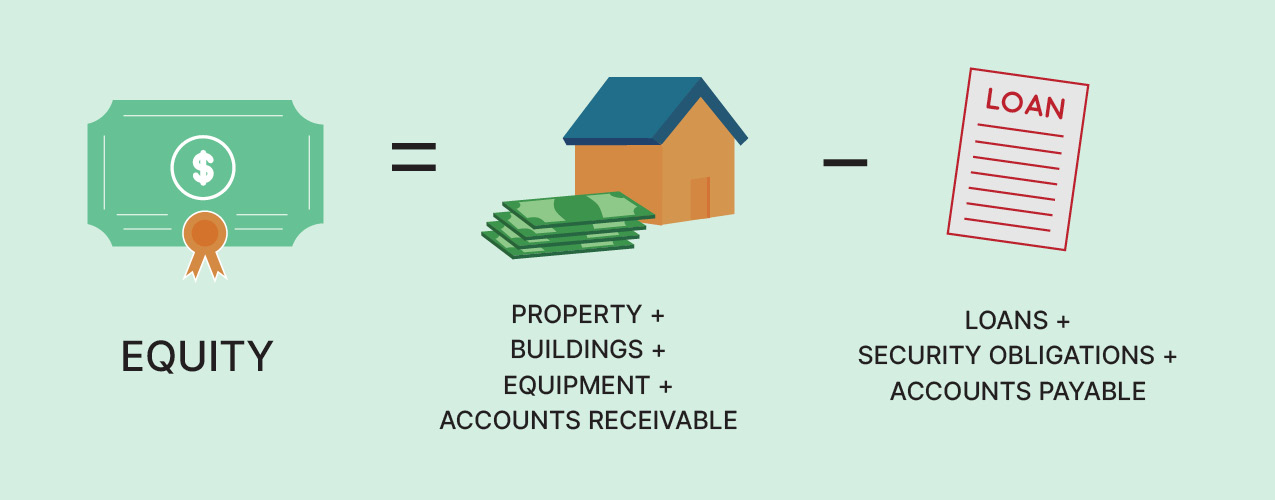
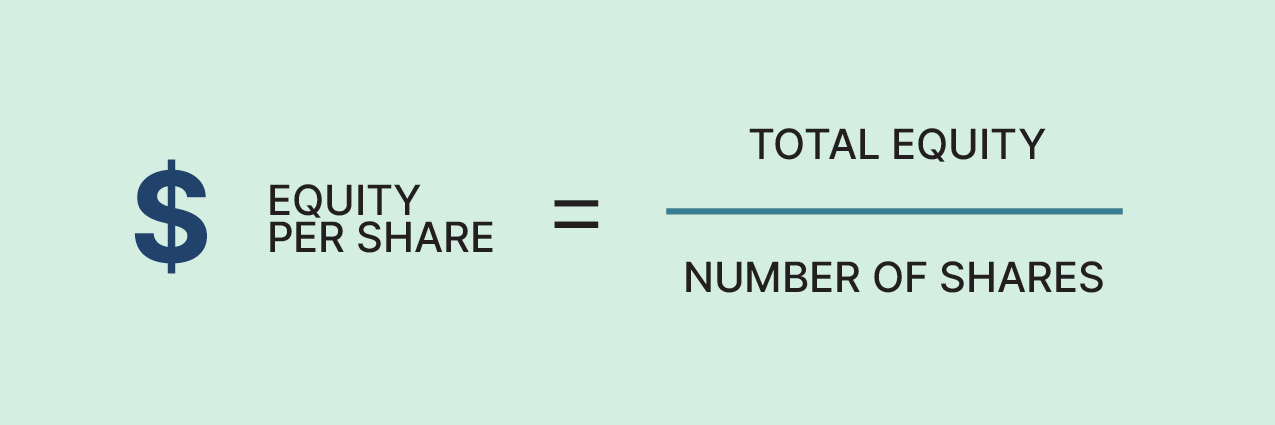
In short, equity refers to the ownership interest or value that an individual or entity holds in an asset or company. It represents the residual interest after deducting liabilities from the asset's or company's total value.&#x20;

### Equity in Homeownership

Taking the model from the above video, let's look at the scenario of an individual purchasing a $500,000 home. The individual has $200,000 to put down on the purchase of the home, so a $300,000 mortgage is taken out.&#x20;

<figure><img src="/files/LytpfxB7LDneWEMqI4sa" alt=""><figcaption></figcaption></figure>

There's **two** ways this individual builds equity in this home, whether it be through renting or through residing in it as their primary residence.

#### Building Equity Through Principle Reduction

Taking a look at the mortgage payments for our example home, and assuming it's a 30-year mortgage with a 6% interest rate, we get an payment schedule that results in the following:

| Year                   | Remaining Balance ($) | Interest Paid ($) | Principal Paid ($) |
| ---------------------- | --------------------- | ----------------- | ------------------ |
| 0                      | 300,000.00            | 0.00              | 0.00               |
| 1                      | 296,315.96            | 17,899.78         | 3,684.04           |
| 2                      | 292,404.71            | 17,672.56         | 3,911.26           |
| 3                      | 288,252.21            | 17,431.32         | 4,152.50           |
| 4                      | 283,843.60            | 17,175.21         | 4,408.61           |
| 5                      | 279,163.07            | 16,903.29         | 4,680.53           |
| 6                      | 274,193.86            | 16,614.61         | 4,969.21           |
| 7                      | 268,918.16            | 16,308.12         | 5,275.70           |
| 8                      | 263,317.06            | 15,982.72         | 5,601.10           |
| 9                      | 257,370.50            | 15,637.26         | 5,946.56           |
| 10                     | 251,057.17            | 15,270.49         | 6,313.33           |
| **Total Equity Built** | **-**                 | **-**             | **48,942.83**      |

**Year 0** starts with the full $300,000 loan. By **Year 10**, the remaining balance is **$251,057.17**. The borrower has paid **$48,942.83 toward the principal**, which represents the **equity built** through mortgage payments (excluding appreciation).

#### Building Equity Through Capital Appreciation

The other way equity is generated is through capital appreciation. Looking at the value of the home now, let's assume that the home appreciates annually at 2.5%. What we get is as follows.

| Year                    | Starting Value  ($) | Appreciation Amount  ($) | Ending Value  ($) | Equity Built  ($) |
| ----------------------- | ------------------- | ------------------------ | ----------------- | ----------------- |
| 1                       | $500,000.00         | $12,500.00               | $512,500.00       | $12,500.00        |
| 2                       | $512,500.00         | $12,812.50               | $525,312.50       | $12,812.50        |
| 3                       | $525,312.50         | $13,132.81               | $538,445.31       | $13,132.81        |
| 4                       | $538,445.31         | $13,461.13               | $551,906.44       | $13,461.13        |
| 5                       | $551,906.44         | $13,797.66               | $565,704.10       | $13,797.66        |
| 6                       | $565,704.10         | $14,142.60               | $579,846.70       | $14,142.60        |
| 7                       | $579,846.70         | $14,496.17               | $594,342.87       | $14,496.17        |
| 8                       | $594,342.87         | $14,858.57               | $609,201.44       | $14,858.57        |
| 9                       | $609,201.44         | $15,229.94               | $624,431.38       | $15,229.94        |
| 10                      | $624,431.38         | $15,610.78               | $640,042.16       | $15,610.78        |
| **Total Equity Built:** |                     |                          |                   | **$140,042.16**   |

**Year 0** the home starts with a value of $500,000. By **Year 10**, the home's estimated value is **$640,042.16**. The owners home has appreciated by **$140,042.16** which represents equity built through capital appreciation.

#### Combined Equity Built

With homeownership, equity is built **simultaneously** through principle reduction and capital appreciation. That means the **total equity** built through ownership **by year 10** is the sum of the two, which would **$188984.99**.

### Equity Understood

In summary, equity represents the ownership value of an asset after deducting any liabilities or debts tied to it. In the context of homeownership, **equity** refers to the portion of the home’s value that the homeowner actually owns, as opposed to what is still owed on the mortgage.

Equity in homeownership is built in two ways:

1. Principle Reduction - As homeowners pay down their loan, the principal portion of each payment reduces the mortgage balance, increasing equity.
2. Capital Appreciation -  If the home’s market value rises due to demand, renovations, or economic conditions, equity increases.

And that the value of equity can fluctuate. Things such as market conditions, ability of a borrower to make payments, and external economic factors can cause equity to increase, or wipe it out entirely.


# Cashflow Sources and Sinks

With equity understood, we're ready to bring into scope all the other elements that influence cashflow on a given real estate investment.

### Cash as the Metric for Each Pillar

Going back to our introduction on real estate investing, there are 4 pillars that make up an investment:

1. Startup Costs
2. Costs of Business
3. Exit Costs
4. Generated Income

Each pillar in it's own way will influence the performance of a given investment. Thus it is quintessential to see how much capital will be consumed or created by each pillar to determine if the overall investment is good or bad. The way we do that is by measuring the net relative cashflow produced by each pillar.&#x20;

### Cashflow Quantified

For the purposes of Tadaima, the Buy and Hold is the investment strategy that is relevant, and is what we'll use for our calculations to come. That said, the same concepts of investing still apply to all strategies equally, and the same efforts can be used on a different strategy to determine it's relative effectiveness.

To calculate the net relative cashflow we use a set of assumptions along with a set of known expenses. The set of assumptions will be used to calculate estimates for things such as interest payments for the mortgage, but also equity gain as well. For the set of known expenses, we've collected what we know to be expensed during most real estate transactions, and assigned them to what we believe is a fair dollar amount for their service as well.&#x20;

**The validity and accuracy of these are unknown and are not to be taken as factual**. Instead they are here to give a guidance to what one particular transaction might look like. Here below we've provided a **detailed cost and income breakdown** for a real estate investment assuming a **$500,000 home** with a **6% mortgage interest rate**.

***

#### **1. Assumptions**

* **Property Price:** $500,000
* **Down Payment:** 5% ($25,000)
* **Loan Amount:** $475,000
* **Loan Term:** 30 years
* **Interest Rate:** 6%
* **Estimated Monthly Mortgage Payment (P+I):** \~$2,848
* **Property Tax Rate:** 1.25% of home value ($6,250/year or $521/month)
* **Insurance Cost:** $150/month
* **Property Management Fee:** 8% of rental income
* **Vacancy Rate:** 5% of annual rental income
* **Estimated Rent:** $4,000/month
* **Appreciation Rate:** 3% per year
* **Annual Maintenance & Repairs:** 1% of property value ($5,000/year)
* **Closing Costs (Purchase & Sale):** 3%

***

#### **1. Startup Costs (Initial Investment)**

These are our costs that are required to start our real estate investment:

| Expense Item                     | Calculation                    | Amount ($)                              |
| -------------------------------- | ------------------------------ | --------------------------------------- |
| **Home Inspection**              | Estimated                      | $500                                    |
| **Appraisal Fee**                | Estimated                      | $600                                    |
| **Title Insurance & Search**     | Estimated                      | $2,000                                  |
| **Loan Origination Fee (1%)**    | $475,000 x 1%                  | $4,750                                  |
| **Legal Fees (Attorney)**        | Estimated                      | $1,500                                  |
| **Permit & Licensing Fees**      | Estimated                      | $500                                    |
| **Transfer Tax (0.75%)**         | $500,000 x .75%                | $3750                                   |
| **Intangible Tax (0.2%)**        | $475,000 x .2%                 | $950                                    |
| **Prorated Property Taxes**      | 6,250 ÷ 12 × 3 (3 months)      | $1,563                                  |
| **Prepaid Interest**             | ($475,000 × 6%) ÷ 12 × 15 days | $1187                                   |
| **Homeowners Insurance Premium** | Estimated                      | $1800                                   |
| **Total Startup Costs**          | **Sum**                        | <mark style="color:red;">$19,100</mark> |

***

These expenses are only incurred **once** at the beginning and that's it.

{% hint style="info" %}
You may be wondering why down payment itself is not included in startup costs. That's because down payment isn't a forgone expense. Assuming a 100% loss-less transaction, if the home had to be sold tomorrow, in theory, that money should be returned.
{% endhint %}

#### **2. Ongoing Costs of Business (Monthly Expenses)**

These are our costs to maintain our investment over time for however long we choose to stay invested:

***

| Expense Item                                | Calculation                     | Monthly ($) |
| ------------------------------------------- | ------------------------------- | ----------- |
| **Mortgage Payment (P+I)**                  | $475,000 loan @ 6% for 30 years | $2,848      |
| **Down Payment Opportunity Cost (5yr est)** | $25,000 x (1.07)^5 - $25,000    | $10,063     |
| **Property Taxes**                          | 1.25% of $500K / 12             | $521        |
| **Private Mortgage Insurance (PMI)**        | 0.5% of $475K / 12              | $198        |
| **Maintenance & Repairs**                   | 1% of $500K / 12                | $417        |
| **HOA Fees (if applicable)**                | Estimated                       | $100        |
| **Homeowners Insurance**                    | Estimated                       | $150        |
| **Landscaping**                             | Estimated                       | $50         |
| **Pest Control**                            | Estimated                       | $33         |

{% hint style="info" %}
Not all of these are routinely scheduled expenses, but for simplicity the one's that aren't have been estimated and allocated to a monthly amount.
{% endhint %}

#### **3. Exit Costs (Selling or Liquidating the Investment)**

These are our costs required to exit our investment, and release ourselves of all obligations that were required for us to maintain our investment before:

| Expense Item                            | Calculation             | Amount ($)                                                                  |
| --------------------------------------- | ----------------------- | --------------------------------------------------------------------------- |
| **Expected Sale Price (after 5 years)** | $500,000 × (1.03)^5     | $579,000                                                                    |
| **Realtor Commission (6%)**             | 579,000 × 6%            | $34,740                                                                     |
| **Staging & Final Repairs**             | Estimated               | $5,000                                                                      |
| **Capital Gains Tax (if applicable)**   | Depends on gains & laws | Variable                                                                    |
| **Prepayment Penalty (if any)**         | Based on loan terms     | 0-Unknown                                                                   |
| **Total Exit Costs**                    | **Sum**                 | <mark style="color:red;">$</mark><mark style="color:red;">**39,740**</mark> |

***

#### **4. Income Sources in Real Estate Investing**

Lastly we have our sources of value that our asset is generating for us, either in the form of equity, income, or expenses saved:

***

| Income Source                            | Calculation                    | Amount ($)                                |
| ---------------------------------------- | ------------------------------ | ----------------------------------------- |
| **Rental Income Saved (Monthly)**        | Estimated                      | <mark style="color:green;">$4,000</mark>  |
| **Security Deposit (5yr yield)**         | $8,000 x (1.07)^5 - $8,000     | <mark style="color:green;">$3,220</mark>  |
| **Property Appreciation (5 years est.)** | $500,000 × (1.03)^5 - $500,000 | <mark style="color:green;">$79,000</mark> |
| **Principle Reduction (5 years est.)**   | Estimated                      | <mark style="color:green;">$20,835</mark> |

{% hint style="info" %}
Rental Income Saved isn't actually income. But because for the Buy and Hold investment, the property also provides the value of being able to reside in it, we need to quantify how much this value is as a utility. We do that by estimating what it would cost to rent an equivalent sized home.&#x20;
{% endhint %}

***

### Final Takeaway

We started by defining what our investment was by selecting the Buy and Hold Strategy. To assess our investment we need to look at how it's influenced from each of the relevant pillars. To do this, we looked at each capital expense we anticipate being required as of our investment, and assigned it to it's relevant pillar. Now with each pillar defined by its related cashflow events, we can now use this information to model a given real estate investment.


# Real Estate Investment Modeling

Understanding how equity is built, and having awareness of how negative and positive cashflow can be generated, it's *time* to add **time** to the equation. This will allow us to model an investment and see how it's performance can change.

### Investment Outcome Relative to Time

With our understanding of our cashflow, let's look at how they change with time

* Time Independent - Our Startup Costs are time independent. They don't increase or decrease as time varies.
* Linear with Time - Things that scale in portion with every increment of time. These are our mortgage payments and rental income saved
* Variable with Time - Things that with every increment of time, have a different outcome.

### Yearly Investment Performance

Modeling of our cashflows relative to how they relate to time, we get the following:

|         | Startup Costs | Exit Costs  | Costs of Business | Revenue     | Ending Balance |
| ------- | ------------- | ----------- | ----------------- | ----------- | -------------- |
| Year 1  | -$19,100.00   | -$30,600.00 | -$4,994.00        | $16,008.71  | -$38,685.29    |
| Year 2  | -$19,100.00   | -$31,212.00 | -$10,071.30       | $32,588.02  | -$27,795.28    |
| Year 3  | -$19,100.00   | -$31,836.24 | -$15,237.73       | $49,764.79  | -$16,409.18    |
| Year 4  | -$19,100.00   | -$32,472.96 | -$23,669.53       | $67,567.37  | -$7,675.13     |
| Year 5  | -$19,100.00   | -$33,122.42 | -$25,863.38       | $86,025.68  | $7,939.88      |
| Year 6  | -$19,100.00   | -$33,784.87 | -$31,336.42       | $105,171.34 | $20,950.05     |
| Year 7  | -$19,100.00   | -$34,460.57 | -$36,926.29       | $125,037.69 | $34,550.84     |
| Year 8  | -$19,100.00   | -$35,149.78 | -$42,641.17       | $145,660.00 | $48,769.06     |
| Year 9  | -$19,100.00   | -$35,852.78 | -$48,489.81       | $167,075.51 | $63,632.92     |
| Year 10 | -$19,100.00   | -$36,569.83 | -$54,481.57       | $189,323.55 | $79,172.14     |

#### Interpretation of Investment Model Results

Looking at the results from our calculations we can infer a few things:

* **Validation of 5 Year Rule** - We can see that at the 5 year mark that our investment turns from negative to positive. Showing that in general the 5 Year Rule holds some truth to it.
* **Significant Fixed Costs** - Our Startup and Exit Costs take up a large portion of all costs incurred during our investment. Even at the 10 year mark, they still make up more than 50% of all expenses.
* **Profitable YoY** - That if we look at our ongoing costs compared to the value generated by our investment, year-over-year it consistently outperforms our costs.

{% hint style="info" %}
Reminder that these results are based on the assumptions we made in the previous section. These assumptions may be inaccurate or could change at a future point under different market conditions, and such changes could result in the above results being no longer valid
{% endhint %}

### In Summary

We've looked at what's under the surface to what we mean when we say "building equity." Bringing our understanding of equity into the picture, we've looked at each of the pillars that come with a given real estate investment. And lastly, we've seen how our real estate investment is anticipated to play out over time by modeling it.


# A Service for the High Mobile

Hopefully, we now have a basic understanding of what traditional real estate investing and real estate ownership looks like from a financial perspective. Now we want to explain how we go from the traditional real estate ownership model, to a co-ownership model like the one Tadaima offers, and the impact that such a change has.

We'll show this by going over two major transformations we make from traditional real estate to co-owned real estate, and how such transformations reduce costs while making things as fair as possible if not, more fair. From there, we'll look at how these transformations impact the function and financial performance of the same investment pillars we used before, and their performance over time. And finally from such, be able to see numerically how the changes implemented ACTUALLY bring the 5 Year Rule down to 1.

This is an exciting section for us, one to bear the proof of how we function as a service to enable home ownership for the highly mobile. Let's Dive in.

~~This is a great base from which now we'll make some transformations. These transformations serve the purpose of showing just how we go from the traditional home ownership model, to a co-ownership model with a company like Tadaima. The two major transformations that do all the work are:~~

* ~~Single Ownership -> Co-ownership Framework~~
* ~~Real-time Transactions -> Intertemporal Transactions~~

~~These two transformations are what make Tadaima Co-ownership able to bring the 5 Year Rule down to 1, but at the same time 10x the complexity of what we as Tadaima have to do. These transformations serve the puprose of removing costs while making things as fair as possible between individuals. In the coming sections, we'll go over just exactly how these two transforms do just that in a little more detail.~~

~~With our transformations applied, we're then going to repeat the following analysis process we did with a traditional real estate ownership situation by looking at how these new transfomrations changes things functionally for each of our investment pillars, and how when modeling they perform over time.~~

Single Ownership forces the concept of transacting on real estate to have [Counterparty Risk](/appendix/real-estate-concepts/counterparty-risk), making things more costly. With a co-ownership framework we can extend on top of the current existing single ownership model, and just append individuals as owners to the home

~~We do this to bring home ownership to the highly mobile. But as we saw in the previous sections, there's huge costs that come with trying to own a home and obligations that come with that to make it worthwhile in the long run. In the content to come we'll go over 1) How Sequential Co-ownership rearranges the pieces to be more cost effective, and 2) model that financially over time to see how it performs.~~

##

##

~~Could I still type if I was walking? I think so? It's kinda a fun thought, but something I think I could get use to pretty quickly~~

We need to address these somehow. We have two ways we can do this 1) We can delay costs, and 2) we can distribute costs, and we 3) detail costs.

#### Delay Costs

remember how in the previous section we didn't consider down payment as one of the costs? That's because we assume in a loss-less transaction you should get that value back.  Since each subsequent co-owner is benefiting from the initial co-owner paying all the costs to acquire the home (loan origination, appraisal, inspection, etc), we need to equalize for that.

## The Final Product

#### Cutting Exit Costs

In exiting a real estate investment, the major cost in the US is paying for the services of real estate agents. In our previous section we estimated the costs of real estate agent services to be roughly $30,000 to $36,000. Simply saying "oh we just won't use real estate agents," and thinking that'll do the trick is over simplifying things.


# Transformation 1: Ownership Structure

The first of the two major transformations is the transformation of the ownership structure that holds real estate. The tried and true method of ownership to date for the average home owner has been the traditional single ownership model. As with everything discussed till now, we're instead using a co-ownership framework that we've designed to hold real estate instead.   With co-ownership the main tradeoff we're making is choosing **mobility over agency**.&#x20;

## The Co-ownership Framework

**Traditional home ownership was optimized for agency.** And with this model, there is an inherently **large number of costs** that the consumer is left to deal with. Of which, most of these costs are due to [Counterparty Risk](/appendix/real-estate-concepts/counterparty-risk) and it's inherent role in the traditional home ownership model. Which as we saw, led to the creation of the 5 year rule in real estate.

**The co-ownership framework is optimized for mobility.** Which means transitions between owner-occupants need to be as frictionless as possible to bring the costs down to something more reasonable for those who are highly mobile. To do such, co-owners willingly forego individual agency.&#x20;

If there's anything that you get out of everything that is to come, it is that the main tradeoff Tadaima takes is again **mobility over agency**. In essence, the current homeowner market in the US is maximized for agency, but at the cost of our mobility. By letting go of that, we can trim costs way down to move things from 5 years down to 1.

### Cutting Counterparty Risk

In our section [Sequential Co-ownership](/tadaima-co-ownership/sequential-co-ownership) we explain what our service is and how it hopes to realign incentives between buyer and seller to be cooperative vs competitive. What this does structurally is eliminate a large part of the [Counterparty Risk](/appendix/real-estate-concepts/counterparty-risk) that is an inherent part of every real estate transaction. It doesn't remove all of it, but it hopefully reduces a huge chunk of it. This hopefully removes the following costs:

* Realtor Commission
* Home Inspection
* Home Appraisal
* Prorated Property Taxes
* Upfront HI Premium

Additionally, we can reduce lending costs as well. With every real estate transaction, the Seller most likely already has a mortgage on the home. The Buyer most likely will have to get a mortgage to purchase the home with. Instead of getting a new mortgage every time like with traditional ownership, in Tadaima we share the same mortgage. By relaying one mortgage between individuals, we hopefully removing the following costs:

* Loan Origination
* Title Insurance & Search
* Intangible Tax
* Prepaid Interest

and in it's place we replace those costs with an alternative that is much cheaper:

* Loan Assumption Fee

### Whats Next?

After removing what we can, we still have imperfections that we need to account for. And accounting for them is exactly what we do. These leads us to our next transformation, changing the temporality of certain transactions.


# Transformation 2: Transaction Temporality

After removing some costs from the system, we're still left with a few costs we can't eliminate. **What we can't eliminate, we account for.** Following our assumptions again, after 10 years, we have a excess of cash from our investment. We can reimburse those costs before we payout any equity. Of the costs that are to be reimbursed, we have two separate accounts for each:

* **Fixed Accounts** - are fixed to the spender for the life of the home.
* **Rollover Accounts** - rollover accounts start with the initial spender, but then rollover to each subsequent co-owner.

### Rollover Accounts

Rollover accounts are for expenditures that we view as unfair for any one person to hold for the life of the home, and especially if they're not the current occupant. What a rollover accounts is:

* Is a capital expenditure is made that get's classified in a rollover account (ex. down payment)
* That is a deficit that the holder of that account maintains until they move out
* Which to move in, the subsequent co-owner must pay in the current balance of all rollover accounts
* By which, the holder of the rollover account is reimbursed for their deficit; and then the rollover account and it's balance is transferred to the incoming co-owner.

An example of something that we account for in a rollover account would be the down payment (even though technically it's not a cost). Classifying it as a rollover account, they only maintain the deficit that comes with a down payment for just their duration in the home, and then it's handed off to whomever next lives in the home.

### Fixed Accounts

Fixed accounts are for expenditures that are more often than not ad-hoc, optional, or for minor expenses. Examples of these are:

* Special Assessments - levied by county or by HOA to fund community repairs or improvements
* Maintenance - Pipe burst, rotting wood, or HVAC Failure as elements needing repair or replacement
* Home Improvements - New appliances, smart lights or blinds, new drywall, paint, or electrical wiring

Each of these is either optional or unpredictable. And because of this nature, they happen in real time, and are the responsibility of each co-owner as they are experienced. Record of such expense will be optional of each co-owner to make, and if made will stick with that co-owner until the final sale point is reached, regardless of if they're still an occupant at that time or not.

### Account Adjustments

The value of the expense occurred doesn't always match the amount held in such an account, and to be credited for at the final sale point. If you pay to put in a fixture that is niche but not appealing to the general public, we have to make an adjustment for that. If you get money back for extra funds in an escrow, we need to make an adjustment for that. If you pay for the roof or HVAC to get replaced/repair when previous co-owners benefited from it, we need to adjust for that. Just because an expense has been made doesn't mean 100% of it will get reimbursed. We make adjustments to account for the nuiance of every transaction. This is in effort to make things as fair as possible between co-owners.

#### Adjustments for Fixed Accounts

Fixed accounts are where most the of discrepancies will come into play and will need a little more care in determining the appropriate adjustment. While we won't go into detail on how exactly we calculate our adjustments, we'll try to elaborate on how we assess them:

* Material or Intangible - Most Intangible expenses such as special assessments will get classified as equitable contributions as defined in the ESA; Material expenses on the other hand have a physical modification to the property, and the quality of that modification needs to be determined.
* Skill of Labor - Does the labor require specialized training, or could a lay person most likely do it? The higher the skill level, the more positive of an adjustment will be made.
* Severity of Improvement - Are we replacing a busted water line, or are we putting up newer and nicer crown molding?

Considering the guidelines above, what we can conclude is that is that replacing a busted water line that is urgent, and needs the help of a skilled plumber is going to most likely get a favorable adjustment. Compared to someone who is just replacing their crown molding with something they consider more pleasing to their eye, and is paying a contractor to do it, when they could reasonably do it themselves.

#### Adjustments for Rollover Accounts

Adjustments for Rollover Accounts are generally rarer, but there are a few cases that they could come into play. For the most part, Rollover accounts are holding intangible expenses, and are in effect for the life of the home, such as down payment, loan origination, and insurance fees etc. Because they play a factor through the life of the home and for each owner, we don't typically make adjustments. A couple adjustments that could be considered though are:

* Mortgage Refinancing - If there's an option to refinance the mortgage at a lower interest rate, and a co-owner elects to do this, we would make an adjustment for this
* Tax or Insurance Increase - If property taxes or insurance change we may need to make an adjustment for these as well

### Implementing our Changes

Our new accounting system definitely changes things up. What was considered a startup cost, is now a rollover account. What is considered an exit cost, is now deferred until until the final sale point. And many more shifts like this have happened because of our transformations. To see the full swath of our changes at play, next we're going to look at our original investment pillars again, and remap them based on our transformations.


# Remapping our Transformations

After Eliminating what we can, and accounting for what we can not, we've now been able to address a large portion of what all is anticipated to happening over the life of a co-owned home. What this does differently is the following:

* Most of our **Startup Costs** before now are factored in as a **Rollover Account**
* **Costs of Business** are the **same for routine scheduled expenses**, but for **any unexpected** incidents there are, they are now accounted for in a **Fixed Account**
* **Exit Costs** are largely **eliminated** by removal of Counterparty Risk and Redundant Buying Power and are delayed until final sale point

But let's go ahead and break these down pillar by pillar and item by item.

### Startup Costs

| Expense Item                     | Calculation                    | Amount ($)                              | Reclassification  |
| -------------------------------- | ------------------------------ | --------------------------------------- | ----------------- |
| **Home Inspection**              | Estimated                      | $500                                    | Rollover Account  |
| **Appraisal Fee**                | Estimated                      | $600                                    | Rollover Account  |
| **Title Insurance & Search**     | Estimated                      | $2,000                                  | Rollover Account  |
| **Loan Origination Fee (1%)**    | $475,000 x 1%                  | $4,750                                  | Rollover Account  |
| **Legal Fees (Attorney)**        | Estimated                      | $1,500                                  |                   |
| **Permit & Licensing Fees**      | Estimated                      | $500                                    | Rollover Account  |
| **Transfer Tax (0.75%)**         | $500,000 x .75%                | $3750                                   |                   |
| **Intangible Tax (0.2%)**        | $475,000 x .2%                 | $950                                    | Rollover Account  |
| **Prorated Property Taxes**      | 6,250 ÷ 12 × 3 (3 months)      | $1,563                                  | Rollover Account  |
| **Prepaid Interest**             | ($475,000 × 6%) ÷ 12 × 15 days | $1187                                   |                   |
| **Homeowners Insurance Premium** | Estimated                      | $1800                                   | Rollover Account? |
| **Total Startup Costs**          | **Sum**                        | <mark style="color:red;">$19,100</mark> |                   |

### Costs of Doing Business

| Expense Item                                | Calculation                     | Monthly ($) |
| ------------------------------------------- | ------------------------------- | ----------- |
| **Mortgage Payment (P+I)**                  | $475,000 loan @ 6% for 30 years | $2,848      |
| **Down Payment Opportunity Cost (5yr est)** | $25,000 x (1.07)^5 - $25,000    | $10,063     |
| **Property Taxes**                          | 1.25% of $500K / 12             | $521        |
| **Private Mortgage Insurance (PMI)**        | 0.5% of $475K / 12              | $198        |
| **Maintenance & Repairs**                   | 1% of $500K / 12                | $417        |
| **HOA Fees (if applicable)**                | Estimated                       | $100        |
| **Homeowners Insurance**                    | Estimated                       | $150        |
| **Landscaping**                             | Estimated                       | $50         |
| **Pest Control**                            | Estimated                       | $33         |

### Exit Costs

### Income Sources

## TODO Map Costs to their new category aka loan origination -> rollover account


# Tadaima Investment Modeling

## TODO Model Tadaima Investment like we did for general Real Estate


# The Equity Model for a Tadaima Home

The Equity Model for a Tadaima Home provides a unique approach to home ownership that can provide benefits such as increased affordability, greater financial stability, and flexibility for those who might not be able to afford a home on their own or for those who are looking for alternative investment opportunities. Let's take a look at how our model works:&#x20;

<figure><img src="/files/tEWGXbvetIxzJHhY3LLl" alt=""><figcaption></figcaption></figure>

The Equity Model for a Tadaima Home involves a company, A Tadaima LLC, that acts as the stakeholder. The company allows for multiple shareholders, which provides a framework for past, present, and future tenants to become co-owners instead of renters.

Let's break down the assets and liabilities like we did in the previous section.&#x20;

## Asset

Since the home is owned by a Tadaima LLC, that holds the title to the property, the asset is the home itself. The type of home could vary from a single family home, to a multifamily home, to a condo or a townhouse, etc.

## Liabilities

The liabilities of the Tadaima Home include a mortgage and bonds.&#x20;

The mortgage is the amount of money borrowed to purchase the home, and the bonds are a financial instrument used to raise additional capital for the company. These liabilities are deducted from the value of the home to determine the shareholder equity.

## Equity

The shareholder equity is calculated by subtracting the total amount of liabilities (mortgage and bonds) from the value of the home. This gives the net value of the home that is owned by the shareholders.

Finally, the equity per share is the share of equity owned by each co-owner. This is calculated by dividing the total equity by the number of outstanding shares of stock. Each co-owner's equity in the Tadaima Home is proportional to their share ownership in the company.

Overall, the Equity Model for a Tadaima Home provides a unique approach to home ownership that allows for multiple co-owners to share in the equity of the property, providing greater financial stability and flexibility for all involved.

<br>


# Homeownership Equity

To understand Equity, we are going to take the normal home ownership model to explain it.  Let’s take a look at the Accounting Equation to start.&#x20;

<figure><img src="/files/7ftS9jtzEMZuZWoB18k7" alt=""><figcaption></figcaption></figure>

First of all, what is an asset?&#x20;

Simply, it's just anything of value that you own which has the potential to generate future economic benefits. Assets can take many forms, but in this instance we will use a property as an example.&#x20;

A liability is any debt that is owed on the asset. The most common liability for homeownership is a mortgage.&#x20;

Equity refers to the ownership value that an individual or entity holds in an asset after all debts and other obligations related to that asset have been paid off. If we want to use the Accounting Equation&#x20;

$$
Equity = Assets - Liabilities
$$

&#x20;

In the normal home equity model the individual is the stakeholder.  Let’s take this model from above and apply it to an individual purchasing a $500,000 home.  The individual has $200,000 to put down on the purchase of the home, so a $300,000 mortgage is taken out.&#x20;

<figure><img src="/files/LytpfxB7LDneWEMqI4sa" alt=""><figcaption></figcaption></figure>


# Shareholder Equity

Shareholder equity, also known as stockholders' equity or owners' equity, is the portion of a company's total assets that is owned by the shareholders or owners of the company. It represents the residual interest in the assets of the company after deducting all liabilities.

In other words, shareholder equity is the amount of the company's assets that would be left over if all of its liabilities were paid off.

Shareholder equity can be calculated using the same formula as the previous section.

$$
Equity = Assets - Liabilities
$$

Let's quickly break down what could be considered Assets:

* Property
* Buildings
* Equipment
* Accounts Receivable

And what could be considered Liabilities:

* Loans
* Security obligations
* Accounts Payable

Let's take the accounting equation from the previous section and apply it to the above to breakdown shareholder equity.&#x20;

<figure><img src="/files/esL3zxScMcaATiwUol6m" alt=""><figcaption></figcaption></figure>

To calculate the equity per share, you would divide the total equity by the number of outstanding shares. If the number of outstanding shares is not provided, you cannot calculate the equity per share.

<figure><img src="/files/0xuvSOBOIoZbUegmClus" alt=""><figcaption></figcaption></figure>

<br>


# Schedule 1:1 with Tadaima

Ready to Get on the Property Ladder Today? The First Place to Start is with Talking with a Tadaima Team Member

We've gone over some of the myths of home buying, then what is Sequential Co-ownership and what it hopes to achieve, how life as a co-owner is different, and what the financials of co-owning look like. And even still with all that said, we're still only scratching the surface.

And then after reading through things, you probably may have questions yourself, or may find a certain concept not entirely clear. And rightly so, there's only so much that can be communicated effectively over documentation. That's why at this point we encourage people to schedule a 1:1 to learn more and to work with a team member on becoming a Co-owner if interested.

### Schedule a Conversation

Below you can find available appointments. These are to just connect you with a Tadaima Team Member. There on a call with them, you can ask them any lingering thoughts or questions that you may still have and get those cleared up. And if from there, you interested in starting a Tadaima Home or joining one as a co-owner, then they're more than happy to talk you through that process.

{% embed url="<https://calendar.google.com/calendar/u/0/appointments/schedules/AcZssZ1MjT6FjiRyp8Nzxf3xqrpkAIfq8znf8EJS2WdM6fqQCx1w5DkyFYW4YcjesdsQTBvwSdM5iTvU>" %}


# Prepare Financial Documents

The first step in any home buying process is getting the documents together to share with lenders your financial profile

### **What Do Lenders Look for When Reviewing a Mortgage Application?**

Lenders assess mortgage applicants based on their ability to **repay the loan**. They evaluate several key factors, commonly known as the **"Five Cs of Credit"**:

1. **Credit Score & History -** Lenders review your **credit report** for payment history, outstanding debts, and any derogatory marks (late payments, bankruptcies, foreclosures).
2. **Income & Financial Stability -** Lenders are looking for what money you have coming in to be able to make the monthly mortgage payment with.
3. **Debt-to-Income (DTI) Ratio -** Your **DTI ratio** (total monthly debts ÷ gross monthly income) shows how much of your income is already committed. Most lenders prefer a **DTI of 36% or lower**, though some loans allow up to **43%-50%**.
4. **Cash Reserves & Assets -** Shows lenders you have a financial cushion(includes things such as savings, investments, retirement accounts)&#x20;
5. **Condition of Property & Value -** The home itself is collateral for the loan, so lenders assess its **appraised value, location, and condition**.

***

### Essential Documents for Mortgage Qualification

To streamline the application process, have these documents ready:

**1. Proof of Income**

* [ ] Last **2 years of W-2s**
* [ ] Recent **pay stubs (last 30-60 days)**
* [ ] Employer contact for verification
* [ ] Last **2 years of tax returns** (Personal & Business)
* [ ] Year-to-date **profit & loss statement**
* [ ] 1099 forms
* [ ] Any other Income: Rental income (lease agreements) Alimony/child support, Social Security, pension, disability income

**2. Credit & Debt Documentation**

* [ ] Make sure your credit accounts are **unfrozen** for a credit report to be ran.
* [ ] Itemized list of **monthly debt obligations** (credit cards, auto loans, student loans, personal loans)

**3. Proof of Assets & Down Payment**

* [ ] **Bank statements** (last 2-3 months) to verify funds
* [ ] Statements for **stocks, bonds, retirement accounts**
* [ ] **Gift letter** (if receiving down payment help from family)

**4. Identification & Legal Documents**

* [ ] Government-issued **photo ID** (driver’s license, passport)
* [ ] **Social Security number** (for credit check)

**5. Property-Related Documents (After You've Found a Home)**

* [ ] Signed **purchase agreement**
* [ ] Homeowners insurance quote
* [ ] Appraisal & home inspection reports (lender will arrange)

***

### **Applying with a Co-Borrow or Co-Signer**

If your financial profile alone isn't strong enough to qualify for a mortgage, you can apply with a **co-borrower** or **co-signer** to improve your chances ( read about [Co-Borrower & Co-Signer](/appendix/real-estate-concepts/co-borrower-and-co-signer)). The Co-Borrower route is generally the route to go when considering to start a Tadaima home with a close friend. The Co-SIgner route is if you're looking to qualify still on your own, but need help qualify from someone who trusts you (usually a family member). **Either way**, these individuals will also need to be involved in the process and will be asked to prepare the above documents too.


# Shop Available Inventory

The beginning of the best part of home owning. SHOPPING!!!

After preparing your financial documents, and submitting those to a lender, hopefully you'll have received back from them a pre-approval letter or a pre-qualification letter. Either should give you some ability to now start looking at getting a home. Before you start your search, there's a couple of things to get clear on before you step into your first home, and some things to keep in consider to make for a successful search experience.

***

### What to Get Clear on Before Beginning your Search

Before you start touring homes, take time to **define your priorities, research neighborhoods, and fully understand your budget** to ensure a smart and efficient search.

✅ **Define Must-Haves vs. Nice-to-Haves** – Separate absolute necessities (number of bedrooms, location, price range) from wish-list items (updated kitchen, finished basement, large backyard). This helps you stay focused and avoid getting distracted by cosmetic features.

✅ **Research Neighborhoods in Advance** – Look into home values, school ratings, crime statistics, commute times, and future developments. Even if you don’t have kids, a **strong school district can increase property value**. Visit at different times of the day to get a real sense of the area.

✅ **Understand Your True Budget** – Being pre-approved tells you what you *can* afford, but that doesn’t mean you should max out your budget. Factor in:

* **Property taxes & homeowners insurance**
* **HOA fees (if applicable)**
* **Maintenance & repairs** (older homes may require more)
* **Utilities & daily costs** specific to the home’s size and location

✅ **Get Pre-Approved, Not Just Pre-Qualified** – A **pre-approval** (vs. pre-qualification) means a lender has verified your financials, making your offer **stronger and more competitive**, especially in a hot market.

👉 **Pro Tip:** Use the **28/36 rule**—your mortgage payment should be **no more than 28% of your gross monthly income**, and total monthly debt (including the mortgage) should stay **below 36%**.

***

### **Strategies for an Enjoyable & Smart Home Search**

Touring homes can be exciting but overwhelming. To stay focused and make confident decisions, use these strategies:

✅ **Limit Home Tours to 3-5 Per Day** – Seeing too many homes at once can cause details to blur together. Take notes, snap photos, and rank each home based on your must-haves.

✅ **Check Beyond the Aesthetics** – Pay attention to functionality:

* **Test water pressure** in sinks & showers
* **Open closets** to check storage space
* **Look at natural light** at different times of day
* **Listen for noise levels** (traffic, neighbors, etc.)

✅ **Be Ready to Act Quickly in Competitive Markets** – Homes can sell within days, so if you find the right one, be prepared to **make a strong offer fast**. Consider:

* **Offering slightly above asking price** (if competition is high)
* **Including an escalation clause** (automatically increases your offer if others bid higher)
* **Limiting contingencies** (while still protecting yourself)

✅ **Stay Flexible & Keep Emotions in Check** – No home is 100% perfect. Focus on what matters most, and don’t let emotions drive you into a rushed or overpriced purchase.

✅ **Work with a Trusted Real Estate Agent** – A knowledgeable agent can guide you through market trends, negotiations, and potential red flags.

👉 **Pro Tip:** If a home is slightly over budget, ask the seller to **cover closing costs** instead of negotiating the price down—it can save you thousands upfront.


# Housing Market History


# Prior 1920s

#### What Was Housing Like for the Average American Before the 1920s?

The housing landscape for the average American prior to the 1920s was vastly different from today.

***

### **Homeownership Rates and Living Arrangements**

* The **U.S. Census data shows 45-50% of households were owner-occupied**, but this reflected the **legal owner of the home, not the individuals living within it.**
* The **Federal Housing Administration (FHA) reported that only 1 in 10 people actually owned the home they lived in.** This discrepancy arises because **multi-generational and extended family living was common**, where **one family member legally owned the home, but multiple generations lived under the same roof.**
* In rural areas, families often built homes themselves or with local help, while urban workers rented apartments or lived in boarding houses.

***

### **Housing Types and Conditions**

* **Urban housing was crowded and unsanitary**, especially in immigrant-heavy cities like New York and Chicago.
* **Rural housing was simpler and often self-built**, but lacked amenities like running water or electricity.
* **Indoor plumbing and electricity were rare luxuries**, primarily for the wealthy or those in well-developed urban centers.
* Heating came from coal or wood-burning stoves, and insulation was minimal.

***

### **Home Prices and Financing Options**

* The **average home price ranged from $2,500 to $4,000**, roughly **$80,000-$120,000 in today’s dollars**, depending on location.
* **There were no long-term, fixed-rate mortgages.** Buying a home often required a **50% down payment**, with **short-term loans lasting 5-7 years**.
* Most financing came from **private lenders, community networks, or local banks**, often with high interest rates.

***

### **Social and Economic Factors Influencing Housing**

* The **Industrial Revolution spurred urbanization**, leading to crowded tenements in cities.
* **Racial and ethnic segregation was rampant**, with restrictive housing covenants limiting where minorities could live.
* The **rise of railroads allowed wealthier families to move to suburban communities.**

***

### **Amenities and Living Standards**

* **Running water and sewage systems were uncommon in rural areas.**
* **Electricity was rare outside major cities.**
* **Kitchens lacked appliances, and homes had rudimentary heating systems.**
* Homes were typically constructed with **hand-crafted materials but lacked proper insulation and modern plumbing.**

***

### **Why the 1920s Marked a Shift**

* The **rise of mass production techniques**, such as those pioneered by Henry Ford, allowed for more affordable, factory-built homes.
* The **Federal Reserve's creation in 1913 stabilized banking**, leading to more structured lending practices.
* The **introduction of longer-term mortgages with lower down payments** in the 1930s and 1940s made homeownership more accessible.

***

### **The Big Picture**

The **low individual ownership rate (1 in 10)** reported by the FHA reflects the **financial reality of working-class Americans** who couldn’t afford homes outright. However, the **higher household ownership rate (45-50%)** captured by census data reflects the **shared living arrangements of the time**, where **one family member legally owned the home, but multiple generations lived together.**

The shift to individual homeownership as part of the "American Dream" didn’t fully emerge until after World War II, when the FHA and GI Bill introduced long-term, low-interest mortgage options that allowed the working class to buy homes independently for the first time.


# FDR's New Deal

### **The 1920s-1970s: Stabilization and Expansion of Homeownership**

#### **The New Deal and the FHA (1930s-1940s)**

* In response to the Great Depression and the collapse of the housing market, **President Franklin D. Roosevelt’s New Deal programs revolutionized homeownership.**
* The **Federal Housing Administration (FHA), established in 1934, introduced the 30-year, fixed-rate mortgage**, allowing middle-class Americans to buy homes with lower down payments and affordable monthly payments.
* The **Home Owners’ Loan Corporation (HOLC)** helped refinance homes to prevent foreclosures.
* The **GI Bill (1944)** provided returning World War II veterans with low-interest, no down payment loans, dramatically expanding suburban homeownership.

#### **The Role of the Federal Reserve and Banking System Stabilization**

* The creation of the **Federal Reserve in 1913** laid the groundwork for more stable banking practices and standardized lending.
* The **Glass-Steagall Act of 1933** separated commercial and investment banking, reducing risky speculation that had contributed to the 1929 stock market crash.
* The **Federal Deposit Insurance Corporation (FDIC)** insured deposits, restoring public confidence in banks.

#### **Post-War Suburban Boom (1950s-1960s)**

* Mass production techniques pioneered by developers like **William Levitt (Levittown)** made suburban housing affordable for millions.
* **Interstate highway construction** and increased car ownership allowed families to move to the suburbs.
* **Racially discriminatory practices like redlining and restrictive covenants** excluded minorities from these opportunities, contributing to racial wealth disparities that persist today.

#### **The 1970s: Inflation and Housing Policy Shifts**

* Rising inflation and interest rates in the 1970s made borrowing more expensive.
* The **Community Reinvestment Act (1977)** aimed to combat redlining and increase minority access to mortgages.

***

### **The Big Picture**

The **New Deal programs, banking system stabilization, and post-war policies transformed homeownership into the "American Dream,"** leading to a surge in suburban living and the **homeownership rate reaching nearly 65% by 1970.**


# Recent Efforts to Increase Homeownership

### **1980s-Present: Efforts to Increase Homeownership and Their Consequences**

#### **Deregulation and Financial Innovation (1980s-1990s)**

* The **deregulation of the financial industry** allowed for more flexible lending practices, such as adjustable-rate mortgages.
* **Fannie Mae and Freddie Mac expanded access to mortgages**, especially for low-income buyers.
* The **Clinton Administration pushed for increased homeownership rates**, particularly among minority and low-income communities.

#### **The Housing Bubble and Crash (2000s)**

* Lenders offered **subprime mortgages with low initial rates but high-risk structures**, leading to a surge in homeownership.
* **Speculative investment and predatory lending practices** contributed to the housing bubble.
* The **2008 housing market crash** resulted in mass foreclosures and a financial crisis, disproportionately affecting minority communities.

#### **Post-Crisis Recovery and Recent Trends (2010s-Present)**

* **Tighter lending regulations through the Dodd-Frank Act (2010)** aimed to prevent risky lending practices.
* The **Federal Reserve’s low interest rates** after the Great Recession helped stabilize the market.
* Rising housing costs and stagnant wages have **created affordability challenges, particularly for millennials and lower-income households.**
* Recent **government-backed programs, such as down payment assistance and first-time buyer incentives**, aim to address racial disparities and boost homeownership.

#### **Mixed Success of These Efforts**

* Homeownership rates **rose from around 65% in 1980 to nearly 70% by the early 2000s.**
* However, **the housing bubble and crash of 2008 erased gains**, leading to widespread foreclosures and wealth loss.
* Post-crisis recovery has stabilized the market, but **affordability and access remain major challenges**, particularly for younger generations and marginalized communities.

***

### **In Closing**

**Deregulation and risky lending practices of the 2000s led to the housing crisis**, and today’s challenges revolve around **affordability and access for marginalized communities.**


# The Housing Trilemma


# The History of the Modern Housing Model

The modern homeownership model has its roots in the late 19th and early 20th century. Before then, homeownership was a privilege of the wealthy, and most people rented their homes.   However, the Industrial Revolution and the growth of the middle class in Europe and the United States led to a demand for affordable housing. (1[^1])

<figure><img src="/files/qFNw9eHGeRY7dNAiZwWk" alt=""><figcaption></figcaption></figure>

According to the US Census Bureau, the homeownership rate in the US was only 47% at its highest rate as early as the 1890s. The rate remained steady at around 46% until the mid-1940s.  From the late 1940s through the 1950s, the homeownership rate increased rapidly to reach 64%.  It has remained relatively stable around 65% in recent years, except for the brief correction in the early 2000s. (2[^2])

The sharp increase in homeownership rates in the mid-20th century was due to the creation of the Federal Housing Administration (FHA) under the National Housing Act of 1934 during President FDR’s administration.  This occurred at a time when the housing industry was struggling due to the Great Depression, with many construction workers unemployed and mortgage terms difficult for homebuyers to meet.&#x20;

The FHA did the following:&#x20;

* reduced down payment requirements
* assessed leaders based on their ability to make payments
* &#x20;ensured that the quality of homes was evaluated before purchase
* made it easier for lenders to offer mortgages to a broader range of borrowers, including those with lower incomes and less money for a down payment

This challenged the traditional mortgage lending process that private banks had been using for years.&#x20;

## Attempts to Increase Homeownership

Efforts to increase homeownership rates since the 1970s have included targeted programs such as goals, down payment assistance (DPA), and cross-subsidies. While these programs have been effective in uplifting sub-communities and specific minorities, they have not significantly increased the overall homeownership rate on a macro level over the past half-century. (3)[^3]

Today, homeownership remains a cornerstone of the American Dream.  It is seen as a symbol of success and stability. However, the high cost of housing in many areas has made it difficult for some Americans to achieve this goal, leading to the ongoing discussions about how to make homeownership more accessible. (4[^4])<br>

<details>

<summary>References &#x26; Citations</summary>

* 1 - "A Short History of Homeownership in America" by Shana M. Watters, Federal Reserve Bank of Atlanta, Economic Review, 2006:[ https://www.frbatlanta.org/-/media/documents/research/publications/economic-review/2006/er0602.pdf](https://www.frbatlanta.org/-/media/documents/research/publications/economic-review/2006/er0602.pdf)
* 2 - "The History of Homeownership in America" by Brent T. White, Georgia State University College of Law, 2013:[ https://digitalcommons.law.gsu.edu/cgi/viewcontent.cgi?article=1001\&context=faculty\_pub](https://digitalcommons.law.gsu.edu/cgi/viewcontent.cgi?article=1001\&context=faculty_pub)
* 3 - "Homeownership in the United States: Historical Perspective and Future Directions" by Richard K. Green, University of Southern California, Journal of Housing Research, 2006:[ https://www.jstor.org/stable/44914983](https://www.jstor.org/stable/44914983)
* 4 - "A Brief History of Homeownership in the United States" by National Association of Realtors, 2021:[ https://www.nar.realtor/blogs/economists-outlook/a-brief-history-of-homeownership-in-the-united-states](https://www.nar.realtor/blogs/economists-outlook/a-brief-history-of-homeownership-in-the-united-states)

</details>

<br>

[^1]: "A Short History of Homeownership in America" by Shana M. Watters, Federal Reserve Bank of Atlanta, Economic Review, 2006:[ https://www.frbatlanta.org/-/media/documents/research/publications/economic-review/2006/er0602.pdf](https://www.frbatlanta.org/-/media/documents/research/publications/economic-review/2006/er0602.pdf)

[^2]: "The History of Homeownership in America" by Brent T. White, Georgia State University College of Law, 2013:[ https://digitalcommons.law.gsu.edu/cgi/viewcontent.cgi?article=1001\&context=faculty\_pub](https://digitalcommons.law.gsu.edu/cgi/viewcontent.cgi?article=1001\&context=faculty_pub)

[^3]: "Homeownership in the United States: Historical Perspective and Future Directions" by Richard K. Green, University of Southern California, Journal of Housing Research, 2006:[ https://www.jstor.org/stable/44914983](https://www.jstor.org/stable/44914983)

[^4]: "A Brief History of Homeownership in the United States" by National Association of Realtors, 2021:[ https://www.nar.realtor/blogs/economists-outlook/a-brief-history-of-homeownership-in-the-united-states](https://www.nar.realtor/blogs/economists-outlook/a-brief-history-of-homeownership-in-the-united-states)


# The Shortcomings and Limitations of the Modern Housing Model

Young adults often lack the capital required to enter the homeownership market. In addition, it may not be advisable to purchase given that relocating for education or work opportunities can be more beneficial for their financial future. Renting can provide easier mobility for a young adult just starting out in their career. We are currently facing two crises in the housing market: the rental market and the homeownership.&#x20;

## Rental Shortcomings

For renters, increasing rental costs and limited supply make it difficult to find affordable and suitable housing. Most rental agreements are typically short-term which can result in frequent moving and which can be disruptive to one’s daily life. A landlord could suddenly decide to sell the property as well, forcing a renter to move.  In addition, renting does not provide the same degree of control over the actual living space. Renters may often be limited in their ability to make changes or improvements to the living space. Finally,  and perhaps most significantly, renting does not offer the opportunity to build wealth.&#x20;

## Limitations to Homeownership

For aspiring homeowners, the price of real estate has become increasingly expensive, making it difficult to save for a down payment. In many areas, there is a shortage of housing, making the demand go up for the limited supply.  With high demand and limited supply, buyers can face stiff competition from other buyers, including investors who may have more resources at their disposal. In addition, a strong credit history is required to secure a mortgage, and the younger you are the less time you have had to build credit, which could make qualifying for a mortgage or securing optimal rates difficult.&#x20;

<br>


# Real Estate Concepts


# Counterparty Risk

#### **Counterparty Risk in Real Estate: A Deeper Dive**

In a real estate transaction, **counterparty risk is the risk that either the buyer or seller will act in bad faith, strategically manipulate the deal, or fail to meet their obligations.** However, this risk is **not just financial—it also includes the risk of misinformation, lack of transparency, and hidden liabilities.**

This is why **specific professions evolved over time to act as intermediaries, protect against these risks, and ensure a fair and transparent transaction.**

***

### **Counterparty Risks from the Buyer's Perspective:**

| Risk Type                    | Description of Risk                                                 | Professional That Mitigates Risk | How They Mitigate It                                                   |
| ---------------------------- | ------------------------------------------------------------------- | -------------------------------- | ---------------------------------------------------------------------- |
| Hidden Property Defects      | Seller fails to disclose structural issues, mold, or other defects. | Home Inspector                   | Conducts thorough inspections and provides detailed reports.           |
| Inflated Property Value      | Seller lists the home at a price far above market value.            | Home Appraiser                   | Provides an objective market valuation to prevent overpayment.         |
| Title Issues                 | Seller may have outstanding liens or disputes over ownership.       | Closing Attorney                 | Conducts a title search and provides title insurance.                  |
| Seller Backing Out           | Seller finds a higher offer after accepting the buyer's.            | Buyer's Real Estate Agent        | Drafts a binding purchase agreement and holds earnest money in escrow. |
| Manipulative Closing Tactics | Seller delays closing or refuses repairs.                           | Closing Attorney                 | Enforces the terms of the contract and manages legal disputes.         |

***

### **Counterparty Risks from the Seller's Perspective:**

| Risk Type                         | Description of Risk                                                         | Professional That Mitigates Risk | How They Mitigate It                                           |
| --------------------------------- | --------------------------------------------------------------------------- | -------------------------------- | -------------------------------------------------------------- |
| Lowball Offers                    | Buyer submits an offer significantly below market value.                    | Seller's Real Estate Agent       | Conducts market analysis and negotiates fair pricing.          |
| Buyer Failing to Secure Financing | Buyer is unable to qualify for a mortgage or backs out late in the process. | Lender & Closing Attorney        | Pre-approves financing and sets clear contract contingencies.  |
| Manipulative Inspection Requests  | Buyer exaggerates repair needs to negotiate a lower price.                  | Home Inspector                   | Provides an unbiased report on the true condition of the home. |
| Appraisal Challenges              | Lender's appraiser undervalues the home, jeopardizing financing.            | Seller's Agent & Appraiser       | Can challenge the appraisal with market data.                  |
| Legal Disputes at Closing         | Buyer disputes terms or delays closing to pressure the seller.              | Closing Attorney                 | Enforces legal terms and ensures smooth transfer of ownership. |

***

### **The Role of Each Professional in Reducing Counterparty Risk:**

#### 1. **Real Estate Agents (Both Buyer & Seller's Agents)**

* **Primary Role:** Act as fiduciaries and advocates for their client (buyer or seller).
* **How They Reduce Risk:**
  * Draft legally binding contracts with contingencies to protect their client.
  * Conduct **market analysis to establish fair value.**
  * **Negotiate repairs, closing costs, and deadlines.**
  * Manage **emotions and expectations** to prevent irrational decision-making.

***

#### 2. **Home Inspector**

* **Primary Role:** Uncover any physical defects or structural issues in the property.
* **How They Reduce Risk:**
  * Conduct a **thorough physical inspection of the home, including electrical, plumbing, foundation, and roof.**
  * Provide an **objective report** to prevent the buyer from overpaying or the seller from being unfairly pressured.
  * **Avoids manipulation from either party** regarding the condition of the home.

***

#### 3. **Home Appraiser**

* **Primary Role:** Provide an independent, unbiased valuation of the property.
* **How They Reduce Risk:**
  * Protects the **lender from over-lending on an overvalued property.**
  * Protects the **buyer from overpaying for an inflated home.**
  * Prevents the **seller from accepting an offer that’s artificially low.**

***

#### 4. **Closing Attorney (or Escrow Agent in Some States)**

* **Primary Role:** Oversee the legal and financial aspects of the transaction.
* **How They Reduce Risk:**
  * Conducts a **title search to prevent undisclosed liens or ownership disputes.**
  * Manages **escrow accounts** to ensure the deposit and funds are protected.
  * Enforces the terms of the contract and **legally transfers ownership.**
  * **Handles closing documentation** to prevent legal disputes after the sale.

***

### **How This System Evolved Over Time to Protect Against Counterparty Risk:**

* Before the **Great Depression and New Deal Era (1930s),** real estate transactions were **highly informal** and **rife with fraud, misinformation, and manipulation.**
* The **creation of the Federal Housing Administration (FHA)** and the introduction of **long-term mortgages** led to the **professionalization of appraisers, inspectors, and closing attorneys.**
* The **National Association of Realtors (NAR)** established ethical standards for real estate agents.
* **Title insurance and escrow accounts became standard practice,** shielding both parties from last-minute disputes or fraud.

***

### **The Real Estate Transaction as a Risk Management System:**

| Profession       | Main Role in Risk Management                                    | Protects Against Counterparty Risk From |
| ---------------- | --------------------------------------------------------------- | --------------------------------------- |
| Buyer's Agent    | Negotiates fair terms and protects buyer interests              | Seller                                  |
| Seller's Agent   | Protects seller from underpricing or manipulative tactics       | Buyer                                   |
| Home Inspector   | Prevents misinformation about the condition of the home         | Both Parties                            |
| Home Appraiser   | Prevents inflated or deflated property valuations               | Both Parties                            |
| Closing Attorney | Legally enforces the transaction, protects against title issues | Both Parties                            |

***

### **Conclusion:**

In the modern real estate market, **counterparty risk is a natural part of negotiation and strategy.** However, **the system of professionals that has emerged — from real estate agents to inspectors, appraisers, and closing attorneys — exists precisely to limit these risks.**

These professionals **act as impartial, third-party validators, ensuring transparency and fairness for both the buyer and seller.**


# Lien Priority

A piece of property can have more than one lien, and when that happens, there’s a hierarchy that determines who gets paid first if the property is sold or foreclosed. Let’s break it down:

### Can a Property Have Multiple Liens?

Yes, a property can have multiple liens from different creditors. Each lien is recorded against the property in **priority order**, meaning some liens get paid first before others.

### How Do Multiple Liens Work?

Liens are ranked based on **priority**, which is typically determined by the order in which they were filed. However, some liens have automatic priority regardless of when they were filed.

#### Types of Liens and Their Priority Levels:

1. **Property Tax Liens (Highest Priority)** – If you owe property taxes, the government’s lien takes priority over all others, even if a mortgage exists.
2. **Mortgage Liens (First Mortgage vs. Second Mortgage)** – The first mortgage (the original home loan) has priority over any additional loans taken against the house.
3. **Home Equity Loans & HELOCs (Second or Third Mortgage)** – If the homeowner takes out a second loan (like a home equity loan), that lender gets a junior lien position.
4. **Mechanic’s Liens** – If contractors or suppliers haven’t been paid for work done on the property, they can file a lien.
5. **Judgment Liens** – If someone wins a lawsuit against the homeowner, a court may place a lien to ensure payment.

#### Example of Multiple Liens on a Property:

Imagine a homeowner has:

* A first mortgage with Bank A ($200,000).
* A home equity loan (second mortgage) with Bank B ($50,000).
* A mechanic’s lien from an unpaid contractor ($10,000).
* A tax lien from unpaid property taxes ($5,000).

**If the Property is Sold or Foreclosed:**

1. The tax lien is paid first (since government liens take priority).
2. The first mortgage is paid next (Bank A gets its $200,000).
3. The second mortgage is paid next (Bank B gets its $50,000).
4. The mechanic’s lien is paid last (if there’s money left).
5. If the sale price doesn’t cover all liens, lower-priority lienholders (like the contractor) may get nothing or need to sue for payment.

### Complications of Multiple Liens

Having multiple liens can create **major challenges**, including:

1. **Difficulty Selling or Refinancing** – Liens must be cleared (paid off or settled) before selling or refinancing a home.
2. **Foreclosure Complications** – If the property is foreclosed, lower-priority lienholders may lose their claim if higher-priority liens use up all the sale proceeds.
3. **Increased Financial Risk** – Homeowners with multiple liens owe more debt, increasing the risk of default.
4. **Legal Issues** – If there are disputes over lien priority or unpaid debts, lawsuits can arise.

### Final Takeaway

A property can have multiple liens, and their priority order determines who gets paid first. Tax liens, mortgages, and secured loans take precedence, while lower-priority lienholders may lose out if there isn’t enough money.&#x20;


# Mortgages & Liens

Liens and mortgages emerged as financial tools related to property ownership, allowing lenders to secure their interests when loaning money for real estate or other valuable assets.

### How Did Liens and Mortgages Come Into Existence?

As property ownership became formalized through **titles** and **deeds**, people needed ways to **borrow money using property as collateral**. This led to the development of **liens** and **mortgages**, which ensure lenders can recover their money if a borrower fails to repay.

1. **Liens** evolved as a legal mechanism that allows creditors to claim a right over property if debts go unpaid. This ensures people and businesses can recover money owed to them.
2. **Mortgages** were created as a specific type of lien where lenders (like banks) provide large sums of money to buy property while holding the property as collateral.

### How Liens Work

A **lien** is a legal claim against a property due to an unpaid debt. It does not transfer ownership but can restrict the owner from selling or refinancing until the debt is paid.

**Types of Liens:**

* **Mortgage Lien** – The bank places a lien on a home when issuing a mortgage loan.
* **Mechanic’s Lien** – A contractor who hasn’t been paid for work done on a house can file a lien against the property.
* **Tax Lien** – The government can place a lien if property taxes are unpaid.
* **Judgment Lien** – A court-ordered lien due to unpaid debts, lawsuits, or legal judgments.

If the lien remains unpaid, the creditor can force a sale of the property to recover the debt.

### How Mortgages Work

A **mortgage** is a loan used to buy property, where the property itself serves as collateral. The lender holds a **mortgage lien** until the borrower repays the loan in full.

**How It Works Step-by-Step:**

1. **Homebuyer Takes a Loan** – A bank lends money to purchase a house.
2. **Lender Holds a Lien on the Property** – Until the loan is fully repaid, the bank has a legal claim on the home.
3. **Borrower Makes Monthly Payments** – Payments cover principal (the original loan amount) and interest.
4. **Once Paid Off, the Lien is Released** – After full repayment, the homeowner receives a clear title, meaning no liens exist.

**What Happens If You Don’t Pay?**

If a homeowner fails to make mortgage payments, the lender can foreclose, meaning they seize and sell the property to recover their money.

### Key Differences Between Liens and Mortgages

| Feature             | Lien                                           | Mortgage                                    |
| ------------------- | ---------------------------------------------- | ------------------------------------------- |
| **Definition**      | Legal claim against a property for unpaid debt | A specific type of lien used for home loans |
| Ownership Transfer? | No, the owner keeps the title                  | No, but lender can foreclose if unpaid      |
| Who Files It?       | Creditors, government, contractors, etc.       | Lenders (banks, financial institutions)     |
| When Does It End?   | When the debt is paid                          | When the mortgage is fully repaid           |

#### Final Thoughts

Liens and mortgages exist to protect lenders and creditors when money is loaned or debts go unpaid.

* **Mortgages allow people to buy homes with borrowed money while using the house as collateral.**
* **Liens ensure unpaid debts can be collected, often restricting sales or transfers of property until resolved.** Understanding these concepts helps homeowners and buyers make informed financial decisions when dealing with property!


# Title & Deed

### What is a Title?

A title is the legal concept of ownership of a property. It represents the rights of the owner to use, control, sell, or transfer the property. Title is not a physical document but rather a legal status that signifies ownership.

### What is a Deed?

A deed is a physical, legal document that transfers property ownership from one person (or entity) to another. It serves as written proof of the transfer of the title. The deed must be signed, notarized, and recorded in the public records to be legally binding.

### Why Did Titles and Deeds Come into Existence?

The need for titles and deeds emerged as societies moved away from informal land claims to structured property rights systems. Here’s why they developed:

1. **To Provide Proof of Ownership** – In early civilizations, property disputes were common. Titles and deeds created clear legal proof of who owned what.
2. **To Enable Secure Transactions** – Buyers needed assurance that they were purchasing land or property from a legitimate owner without risk of fraud.
3. **To Support Government Records and Taxation** – Governments needed a way to track property ownership for taxation and legal enforcement purposes.
4. **To Facilitate Loans and Investments** – Property owners could use titles as collateral for loans, making real estate an asset in financial systems.

### How Titles and Deeds Work Today

1. When Buying Property:
   * A title search is conducted to ensure there are no legal claims (liens, disputes, or unpaid taxes) against the property.
   * The buyer and seller sign a deed to transfer ownership.
2. Recording the Deed:
   * After the deed is signed, it is recorded in the local government office (such as the county clerk's office).
   * This creates a public record of ownership.
3. Title Insurance:
   * Buyers often get title insurance to protect against hidden ownership claims or errors in public records.
4. Transferring Ownership in the Future:
   * If the owner sells the property, a new deed is created to transfer ownership to the next buyer.

In short, a title represents legal ownership, while a deed is the document that proves and transfers that ownership. They exist to establish clear ownership rights, prevent disputes, and facilitate secure property transactions.


# Co-Borrower & Co-Signer

### Co-Borrower vs. Co-Signer: What’s the Difference and Why Does It Matter in Home Buying?

When it comes to buying a home, not everyone qualifies for a mortgage on their own. That’s where **co-borrowers** and **co-signers** come into play. Both roles can help improve loan approval chances, but they serve distinct purposes. Understanding the differences is key to making the right decision for your financial future.

#### What is a Co-Borrower?

A **co-borrower** is someone who **shares equal responsibility for the mortgage and ownership of the home**. Their **income, credit score, and financial history are factored into the loan approval process**, which can increase the amount you qualify for and potentially secure a lower interest rate.

**Key Features of a Co-Borrower:**

* **Ownership of the home**: Their name is on the title and mortgage.
* **Equal responsibility for payments**: Both parties are legally obligated to make monthly mortgage payments.
* **Impact on credit score**: Missed payments affect both the primary borrower’s and co-borrower’s credit scores.

#### What is a Co-Signer?

A **co-signer**, on the other hand, **does not own the home** or **share in the mortgage payments unless the primary borrower defaults**. A co-signer’s role is to **guarantee the loan**, giving the lender additional security in case the primary borrower is unable to make payments.

**Key Features of a Co-Signer:**

* **No ownership stake**: Their name is not on the title.
* **Backup financial responsibility**: Only steps in if the primary borrower fails to make payments.
* **Credit impact**: The loan appears on the co-signer’s credit report and affects their debt-to-income ratio.

#### Side-by-Side Comparison:

| Feature                      | Co-Borrower                                 | Co-Signer                                               |
| ---------------------------- | ------------------------------------------- | ------------------------------------------------------- |
| Who They Are                 | Spouse, close friend, or family member      | Usually a family member                                 |
| Ownership of Home            | Yes – Their name is on the title            | No – They do not own the home                           |
| Responsibility for Payments  | Shared – Both are equally responsible       | Backup – Only steps in if the primary borrower defaults |
| Effect on Loan Qualification | Combined income & credit improve loan terms | Helps qualify but doesn’t contribute income             |

#### When Should You Use a Co-Borrower or a Co-Signer?

* **Use a co-borrower** when: You want to increase your loan eligibility and share ownership of the property.
* **Use a co-signer** when: You need help qualifying for a loan but want to maintain sole ownership of the home.

#### A Historical Perspective

The concept of co-borrowers and co-signers emerged with the rise of **modern mortgage lending practices in the 1930s**, particularly with the **Federal Housing Administration (FHA) program**. These roles became more formalized as **joint ownership and financial guarantees** allowed more Americans to access homeownership, especially during the **post-World War II housing boom** and the **GI Bill era**.

#### Final Thoughts

Whether you choose a co-borrower or a co-signer depends on your financial situation and long-term goals. Both options can be valuable tools in securing a mortgage, but understanding their responsibilities is crucial to avoid financial pitfalls down the road.


# Appraisals

A **real estate appraisal** is the process of determining the **fair market value** of a property. It is conducted by a licensed or certified appraiser, often hired by a lender, buyer, or seller to assess the property's value for various purposes.

***

### **Historical Background**

* **Ancient Roots**: Property valuation dates back to ancient civilizations like Rome and Mesopotamia, where land and property were assessed for taxation and trade purposes.
* **Modern Emergence**: The formal appraisal profession as we know it today began taking shape in the **early 20th century** in the U.S., primarily in response to the banking and financial system's need to assess collateral for loans.
* **Standardization**: The **Appraisal Institute** was founded in **1932** to establish ethical standards and methodologies for real estate valuation.

***

### **Purpose of a Real Estate Appraisal**

1. **Mortgage Lending**: Lenders require appraisals to ensure the property is worth the loan amount.
2. **Buying or Selling a Home**: Buyers and sellers use appraisals to negotiate a fair price.
3. **Property Tax Assessment**: Local governments assess property values to calculate taxes.
4. **Estate Planning and Settlements**: Used when dividing assets or dealing with inheritance.
5. **Insurance Purposes**: To determine replacement value in case of damage.
6. **Refinancing**: Helps lenders assess the current value of a property for loan modification or equity release.

***

### **How Does the Appraisal Process Work?**

#### Step 1: **Initial Inspection**

* The appraiser visits the property to evaluate its **physical condition**, **location**, **size**, and **unique features**.

#### Step 2: **Market Analysis**

* The appraiser researches **comparable sales (comps)** in the neighborhood, which are recent sales of similar properties.

#### Step 3: **Valuation Methods**

Appraisers typically use one or more of these methods:

1. **Sales Comparison Approach**: Comparing the property to recently sold properties with similar characteristics.
2. **Cost Approach**: Estimating how much it would cost to rebuild the property from scratch, minus depreciation.
3. **Income Approach**: Primarily used for rental properties, it calculates the value based on potential income generation.

#### Step 4: **Final Report**

* The appraiser compiles all findings into a formal **appraisal report**, which includes:
  * Property details
  * Neighborhood analysis
  * Comparable sales data
  * Final estimated value

***

### **Who Conducts the Appraisal?**

* **Licensed or Certified Appraisers**: In the U.S., appraisers must be certified through organizations like the **Appraisal Institute** and follow standards set by the **Uniform Standards of Professional Appraisal Practice (USPAP)**.

***

### **Why Are Appraisals Important?**

* Protects lenders from over-lending.
* Helps buyers avoid overpaying.
* Ensures fair property tax assessments.
* Provides clarity in legal and financial disputes.

***

### **Limitations and Challenges**

* Subjective factors can sometimes influence value.
* Market fluctuations can affect accuracy.
* Limited access to accurate sales data in some regions.

***

### **Conclusion**

Real estate appraisals play a critical role in the housing market, ensuring fairness and stability. They serve as a safeguard for both lenders and buyers, helping to establish an objective property value in a market that can often be influenced by emotion and speculation.


# Other Myths


# Wait Till Marriage

### **How Did the Idea of Waiting Till Marriage to Buy a Home Start?**

The notion of waiting until marriage before buying a home is largely rooted in tradition and historical economic structures. In past generations:

1. **Social Norms** – Marriage was seen as the foundation for financial stability, and homeownership was often tied to starting a family.
2. **Single Income Households** – Many families relied on a single income, making homeownership more feasible after marriage when financial security was more stable.
3. **Lending Practices** – Banks historically favored married couples over single individuals due to perceived financial reliability.
4. **Cultural & Religious Influences** – Many traditions encouraged homeownership as part of settling down within a marriage.

### **Why Waiting Till Marriage Might Not Make Sense Today**

For the average person, delaying homeownership until marriage might not be the best strategy due to several modern factors:

1. **Later Marriages** – The average marriage age has increased significantly, meaning waiting could delay wealth-building through home equity.
2. **Rising Housing Costs** – Real estate prices are climbing, and waiting may make homeownership even less affordable in the future.
3. **Financial Independence** – More people are financially independent before marriage, making solo homeownership a viable option.
4. **Investment Opportunity** – Buying earlier allows you to build equity, rent out rooms for extra income, and potentially upgrade later.
5. **Uncertain Life Paths** – Not everyone gets married, and waiting for an uncertain milestone could mean missing out on valuable financial growth.

### **How to Get on the Property Ladder Before Marriage**

If you want to buy a home before marriage while making a smart financial decision, consider:

1. **Buy a Starter Home or Condo** – Opt for something affordable that can appreciate over time.
2. **House Hack** – Buy a multi-bedroom home or duplex and rent out part of it to offset mortgage costs.
3. **Partner with Friends or Family** – Consider co-buying with a trusted person to share the costs and responsibilities.
4. **Explore First-Time Buyer Programs** – Take advantage of grants, low down payment options, or first-time buyer incentives.
5. **Keep It Flexible** – Choose a home that’s easy to rent or resell if your plans change post-marriage.
6. **Live Below Your Means** – Don’t stretch your budget too thin—ensure you can afford the home on one income if needed.

### **Final Thoughts**

Buying a home before marriage can be a great financial move if done wisely. It allows you to start building equity, provides stability, and gives you options regardless of future life changes. While marriage can offer financial benefits (dual income, tax advantages), waiting solely for that milestone might mean missing out on key opportunities.


# Possibility of 2008 Again

When considering buying a home, many people worry about the possibility of **another 2008-style housing crash**. But is that fear justified? Let’s break down what made **the 2008 crisis unique**, why today’s market is different, and what people often get **right and wrong** when factoring this into their decision.

***

#### **What Made the 2008 Crash Unique?**

The **2008 housing crisis** wasn’t just another economic downturn—it was a **perfect storm of bad lending practices, financial engineering, and excessive speculation**. Here’s what set it apart:

1. **Subprime Lending & No-Doc Loans**
   * Banks gave out mortgages to people who couldn’t afford them, often with little or no income verification. These “subprime” loans came with high interest rates that ballooned after a few years, leading to mass defaults.
2. **Massive Over-Leverage & Securitization**
   * Banks bundled risky mortgages into **mortgage-backed securities (MBS)** and **collateralized debt obligations (CDOs)**. These products were sold as low-risk investments, despite being full of bad loans.
3. **Housing Speculation & Overbuilding**
   * Cheap credit fueled **speculative buying**, driving home prices to unsustainable levels. Homebuilders, responding to demand, **overbuilt** in many markets. When demand collapsed, supply flooded the market, worsening price declines.
4. **Financial System Contagion**
   * Because risky mortgages were deeply embedded in the global financial system, **major banks collapsed** when homeowners defaulted en masse. The crisis spread beyond real estate, triggering a worldwide recession.

***

#### **Why Today’s Housing Market Is Different**

While no market is crash-proof, **current conditions don’t resemble 2008**. Here’s why:

✅ **Stricter Lending Standards** – Lenders now require higher credit scores, income verification, and lower debt-to-income ratios before approving mortgages.\
✅ **More Homeowner Equity** – People have more **skin in the game**, with larger down payments and lower loan-to-value (LTV) ratios.\
✅ **No Overbuilding** – Unlike the mid-2000s, today’s market is facing a **housing shortage**, not a surplus.\
✅ **Fixed-Rate Mortgages Dominate** – Most borrowers now have **fixed-rate** mortgages rather than risky adjustable-rate loans.

***

#### **What People Get Wrong About Another 2008**

🚫 **Assuming Home Prices Will Collapse Again**

* While **price corrections** happen, a full-blown crash requires a **surge in forced selling** (foreclosures). That’s unlikely given today’s strong lending standards and homeowner equity.

🚫 **Thinking Rising Interest Rates = 2008 Repeat**

* While rising mortgage rates **reduce affordability**, they don’t **automatically** lead to a housing crash. Prices might cool or even decline, but not necessarily collapse.

🚫 **Believing the Market Moves in Cycles Like 2008**

* Not all downturns are equal. The **2008 crash was a credit crisis**, while most other market slowdowns (like in the early ‘90s) were driven by economic recessions without widespread financial instability.

***

#### **What People Get Right About Being Cautious**

✅ **Affordability Matters** – Just because home prices have been rising doesn’t mean they’ll continue indefinitely. It’s smart to consider **whether you can truly afford a home**—not just assume prices will always go up.

✅ **Higher Mortgage Rates Change the Math** – Buying now means locking in higher monthly payments than during the ultra-low rate era of 2020-2021. That should factor into your decision.

✅ **Macroeconomic Risks Still Exist** – While 2008 isn’t repeating, **job losses, inflation, or economic downturns** could still put downward pressure on prices in some areas.

***

#### **The Bottom Line: Should You Worry About Another 2008?**

A **full-scale housing crash like 2008 is unlikely** due to stronger fundamentals, but that doesn’t mean home prices can’t **decline or stagnate** in certain markets. Instead of fearing a repeat of the past, focus on:

* **Buying within your means**
* **Evaluating local market conditions** (some areas may be overvalued)
* **Planning for a long-term hold** rather than expecting quick appreciation

If you’re in a stable financial position and find a home that fits your needs, **fearing another 2008 shouldn’t necessarily stop you from buying**—just make sure you’re making a decision based on **today’s reality, not yesterday’s crisis**.


# Renting is Cheaper

### **When Is Renting Actually Cheaper Than Buying?**

Renting can be more affordable than owning in certain situations, such as:

1. **High-Interest Rate Environments** – When mortgage interest rates are high, monthly payments can be significantly more expensive than rent.
2. **Costly Markets** – In expensive cities (like New York or San Francisco), home prices may be so high that renting makes more financial sense.
3. **High Maintenance & HOA Costs** – Homeownership comes with extra costs like property taxes, repairs, insurance, and HOA fees, which can make renting more appealing.
4. **Unstable Income or Credit** – If your income is unpredictable or your credit score isn’t great, renting provides flexibility without the long-term financial burden of a mortgage.

### **What’s Misguided About Assuming Renting Is Always Cheaper?**

While renting may have lower upfront costs, it’s not necessarily a better financial decision in the long run because:

1. **Rent Costs Rise Over Time** – Rent typically increases every year, whereas a fixed-rate mortgage keeps monthly payments stable.
2. **No Equity or Wealth Building** – Rent is an expense that doesn’t build any long-term value, whereas mortgage payments contribute to homeownership.
3. **Opportunity Cost** – Money spent on rent could be used toward a down payment or investment in real estate, which appreciates over time.
4. **Tax Benefits** – Homeowners may qualify for tax deductions on mortgage interest and property taxes, which renters don’t get.
5. **Forced Savings** – Paying a mortgage forces you to build wealth by paying down the loan, whereas renting doesn’t provide this benefit.

### **How to Determine If Renting or Buying Is Cheaper for You**

Instead of assuming one is better than the other, calculate the true cost by considering:

1. **Price-to-Rent Ratio** – Divide the home’s price by the annual rent of a comparable property.
   * If the ratio is **under 15**, buying is generally better.
   * If it’s **above 20**, renting may be the smarter move.
2. **Total Cost of Ownership** – Factor in property taxes, insurance, maintenance, and HOA fees beyond just the mortgage payment.
3. **Break-Even Point** – Calculate how long it would take for buying to become cheaper than renting, considering appreciation and rent increases.
4. **Investment Potential** – Consider whether you could rent out part of your home (house hacking) or if the property is in a high-growth area.
5. **Your Lifestyle & Financial Goals** – If you value flexibility, renting may be better. If you want stability and long-term wealth, buying is usually the way to go.

### **Final Thoughts**

Renting *can* be cheaper in the short term, but over time, homeownership is often the better financial decision due to equity growth and stable costs. The best choice depends on personal circumstances, local market conditions, and long-term goals—so always do the math before deciding!